2026 Best DC Charging Station Safety Standards

Time:2026-11-18 Author:Oliver
0%

A DC fast charger can deliver hundreds of kilowatts, so safety depends on more than a sturdy cabinet. Inside, power electronics, cooling systems, contactors, and high-voltage cables must work together under demanding conditions. A loose connector, blocked air intake, or damaged cable can turn an ordinary charging session into a serious fault. Small details count.

This guide to the 2026 Best DC Charging Station Safety Standards explores what safety standards apply to dc charging stations and how those standards shape equipment design, testing, installation, and operation. It covers relevant frameworks such as IEC 61851-23 for DC charging equipment and UL 2202 for electric vehicle charging systems, while recognizing that applicable requirements vary by country and project. Standards are not interchangeable, and a product certification does not automatically confirm that a site installation is safe. That distinction is easy to miss.

Readers will find practical points to assess, including electrical protection, grounding, temperature monitoring, enclosure protection, emergency controls, and connector condition. The aim is to help operators, installers, and buyers ask better questions—not to replace a qualified assessment or local code review. Even well-designed equipment needs inspection, maintenance, and clear operating procedures. No checklist catches everything. Safety is ongoing work.
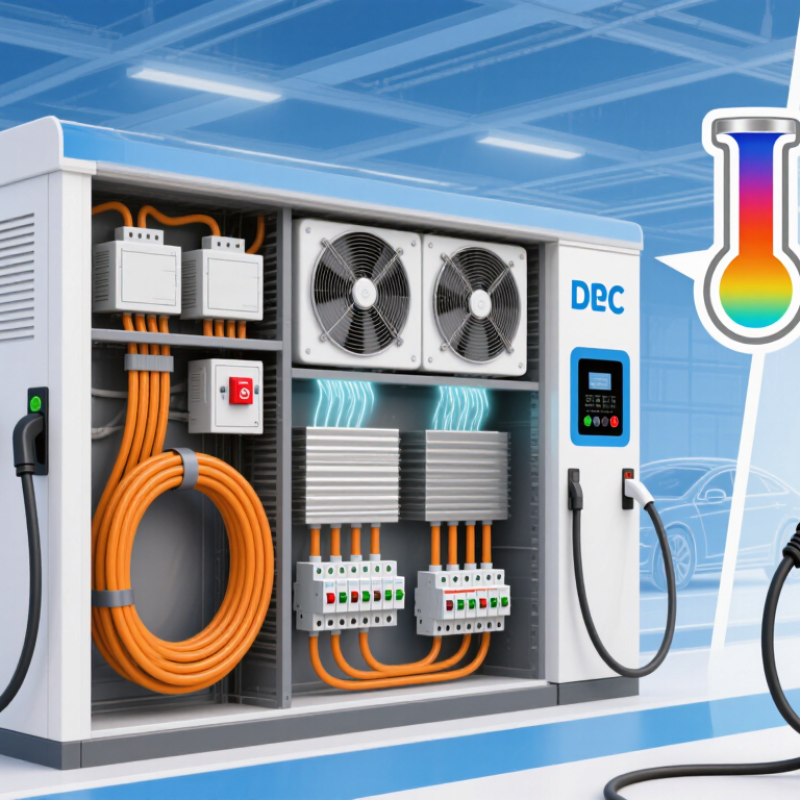
2026 Best DC Charging Station Safety Standards

Scope and Core Principles of DC Charging Station Safety

2026 Best DC Charging Station Safety Standards

Scope and Core Principles of DC Charging Station Safety

DC charging station safety covers the full path from incoming supply to the vehicle connector. It includes power conversion, insulation, protective grounding, cables, connectors, enclosure design, control software, installation, and maintenance. The goal is not simply to prevent electric shock. A safe system must also limit fire risk, manage heat, withstand weather, and enter a predictable state when a fault occurs.

Core principles include electrical isolation, overcurrent protection, temperature monitoring, and clear fault detection. Charging should stop when a connector overheats, insulation degrades, or communication becomes unreliable. Enclosures need to resist expected dust and moisture, while cable routing should reduce trip hazards and strain. Small details matter. A damaged cable may look usable from a distance, so inspection procedures need clear criteria and trained staff.

Standards help define test methods and minimum safety requirements, but they do not replace careful site assessment. Installers should consider available electrical capacity, ventilation, drainage, vehicle access, and emergency shutoff visibility. Maintenance teams should record recurring faults and inspect connectors for discoloration, looseness, or cracked housings. No checklist catches every field condition. Requirements also change, so operators should verify current editions and applicable local rules rather than rely on an old commissioning report.

2026 Best DC Charging Station Safety Standards — Scope and Core Principles

IEC 61851-23 covers DC electric vehicle supply equipment with rated supply voltage up to 1,000 V AC or 1,500 V DC, and rated output voltage up to 1,500 V DC. These are scope ceilings, not recommended operating voltages or standalone safety limits. Safety design also addresses electric shock protection, protective bonding, insulation, overcurrent, thermal hazards, and environmental protection; applicable requirements depend on the equipment and installation.

Source: IEC 61851-23:2023, scope. Voltage ceilings shown in volts.

Electrical, Thermal, and Mechanical Safety Requirements

A 2026 DC charging station should be assessed as an integrated electrical, thermal, and mechanical system. IEC 61851-23:2023 covers DC electric-vehicle supply equipment, while IEC 62196-3 addresses compatible DC charging connectors. In practice, verify protective grounding, insulation, isolation monitoring, and connector interlocks during commissioning. A loose terminal can create resistance and heat; a wet or damaged enclosure can compromise protection. Small details matter.

Thermal safety needs attention at the cable and connector, not only inside the cabinet. Use temperature monitoring and automatic power reduction or shutdown when limits are exceeded. Inspect for discolored pins, softened insulation, blocked cooling paths, and hot spots under load. Mechanically, check cable strain relief, connector latches, enclosure seals, and impact protection. The 2024 U.S. Electric Vehicle Experience Public Charging Study reported that 19% of charging visits failed because equipment was out of service or malfunctioning. That is not a fire rate, but it highlights the value of routine inspection and prompt repairs.

Tips: Log connector temperatures and fault codes during peak-load tests. Check cable bends and latches before opening a station to users. The U.S. National Electric Vehicle Infrastructure program sets a 97% uptime requirement per charging port; treat uptime tracking as a maintenance signal, not proof of safety. I would still review inspection intervals after harsh weather or repeated faults.

Installation, Site, and Environmental Protection Measures

The International Energy Agency’s Global EV Outlook 2024 reports that public charging points grew 40% worldwide in 2023, while fast chargers grew 55%. That growth makes careful site planning essential. Keep chargers clear of reversing lanes, delivery routes, and fire access paths. Use impact barriers where vehicles could strike equipment, but preserve room for maintenance and wheelchair access. A tidy drawing helps. Real sites still have awkward corners.

Have a qualified electrical professional verify load capacity, grounding, protective devices, and emergency isolation before energization. Route cables to avoid standing water, sharp edges, and trip hazards. Specify enclosure protection using IEC 60529 IP ratings, matched to dust, spray, and washdown exposure. An IP rating alone does not guarantee flood protection. Check drainage, salt exposure, sunlight, and ventilation; heat can shorten equipment life. After severe weather, inspect seals, connectors, barriers, and cable jackets. We sometimes overlook small cracks.

Tips: Photograph the installation before opening day. Record inspection dates and repair findings. Keep emergency labels visible from the vehicle bay, and test access to shutoffs during routine maintenance. Recheck drainage after heavy rain; a layout that looked dry in spring may not stay dry in autumn.

Operation, Inspection, and Emergency Response Procedures

Safe DC charging begins before the connector reaches the vehicle. Trained operators should check the cable, plug, enclosure, and surrounding ground for cuts, moisture, loose parts, or impact damage. Keep the marked area clear, and confirm that ventilation openings are not blocked. A quick look matters.

During operation, follow the station’s posted instructions and the vehicle’s charging guidance. Seat the connector firmly, then watch for warning messages, unusual heat, smoke, crackling, or a sharp electrical smell. Do not force a resistant plug or continue a session when equipment behaves unexpectedly. Stop charging using the normal control if it is safe to do so. Staff should avoid touching damaged cables or exposed components and keep other people away.

Inspection needs a routine, not just a reaction to faults. Record visible damage, error messages, cleaning, and repairs, with dates and staff initials. Check emergency stop controls according to the equipment instructions, and make sure access routes remain open. If smoke, fire, or electric shock is suspected, do not approach energized equipment. Call local emergency services, follow site procedures, and give responders the station location and observed hazard. Isolate power only when trained and authorized. Records can miss small warning signs; review them with care.

2026 Compliance, Certification, and Standards Selection Criteria

2026 Best DC Charging Station Safety Standards
2026 Compliance, Certification, and Standards Selection Criteria

Public charging networks are expanding quickly. The IEA’s Global EV Outlook 2025 reports that more than 1.3 million public charging points were added in 2024, bringing the global total above five million. For DC equipment, assess IEC 61851-23:2023 for charging systems and IEC 61851-24 for digital communication. Also check the installation rules that apply at the site. Request test reports for the exact model, power range, connector, and firmware. A certificate for a similar unit is not enough.

Review electric-shock protection and fault controls against relevant standards, including UL 2202 and the UL 2231 series where applicable. Check insulation monitoring, protective bonding, emergency shutdown, thermal limits, and ingress ratings. Small details matter. During a site inspection, see whether cable strain relief is secure and the emergency stop is reachable without crossing vehicle traffic. Match certification scope to local grid conditions and exposure to dust, rain, or salt. Compare accredited laboratory reports, production surveillance, and change-control records, not just sales sheets. No checklist catches every installation risk; that deserves a second look.

2026 Best DC Charging Station Safety Standards — Compliance, Certification, and Standards Selection Criteria

Use this table as a standards-selection reference, not as a substitute for a conformity assessment. Applicable requirements depend on the installation country, equipment type, adopted code editions, and the authority having jurisdiction (AHJ). Confirm current editions and local amendments before design, testing, or procurement.

Standard or framework Primary safety scope Typical relevance to DC charging Evidence to request or verify Selection and compliance check
IEC 61851-1
Electric vehicle conductive charging system — General requirements
General requirements for conductive EV supply equipment, including operating conditions, electrical safety functions, and equipment characteristics. Foundational IEC-system reference for charging equipment; use with the applicable DC-specific part and national adoption. Test reports and conformity documentation identifying the equipment configuration, applicable edition, and any national deviations. Check that the assessment covers the complete charging system and its intended operating environment, not only individual components.
IEC 61851-23
DC electric vehicle supply equipment
Requirements specific to DC EV supply equipment, including electrical and functional safety aspects of DC charging. Directly relevant to off-board DC charging equipment within IEC-based markets. Applicable test reports, documented protective functions, ratings, and stated interface configuration. Confirm the equipment’s voltage, current, power, and operating modes fall within the assessed scope.
IEC 61851-24
Digital communication between DC EV supply equipment and the vehicle
Communication requirements associated with DC charging control and safety-related charging sequences. Relevant where the charging system uses the communication methods covered by the applicable edition. Interoperability and protocol test results, plus documentation of communication-dependent safety responses. Verify compatibility with the intended vehicle interface and ensure communication faults lead to a defined safe state.
IEC 62196-3
DC and combined AC/DC vehicle couplers
Dimensional compatibility and electrical requirements for specified DC and combined charging couplers. Relevant to the vehicle connector and inlet interface in markets using the covered coupler configurations. Connector conformity documentation, ratings, temperature-rise results, and identification of the applicable configuration. Match the coupler to the charging system, vehicle interface, current rating, and locally accepted connector requirements.
UL 2202
Electric Vehicle (EV) Charging System Equipment
Safety evaluation of EV charging system equipment for markets that use this UL standard. Commonly relevant to DC charging equipment certification for the United States and other jurisdictions accepting the certification. Certification listing or report for the exact model and configuration, including applicable conditions of use. Check that the evaluated product is the installed product; a component certificate alone does not establish system certification.
UL 2231-1 and UL 2231-2
Personnel protection systems for EV supply circuits
Protection against electric shock, including requirements for personnel protection systems and protective devices. Relevant to equipment and circuit protection assessments where required by the applicable North American product standard or code. Evidence showing the applicable protective scheme, device evaluation, fault testing, and coordination with the charging equipment. Confirm protection is appropriate for the system architecture and does not rely on an incompatible or unverified device combination.
UL 2251
Plugs, receptacles, and couplers for EVs
Safety requirements for EV plugs, receptacles, and couplers within the standard’s scope. Relevant to connector components used in North American EV charging equipment. Component certification, ratings, temperature-rise and mechanical test evidence, and approved conditions of use. Verify the connector’s voltage and current ratings and ensure the certified component is used within its evaluated limits.
NFPA 70 (National Electrical Code), Article 625
Electric Vehicle Power Transfer System
Electrical installation requirements for EV power transfer systems, including wiring methods and installation-related safeguards. Relevant to installations in the United States where this code edition has been adopted, subject to state and local amendments. Installation drawings, equipment ratings, circuit calculations, inspection records, and AHJ approval where applicable. Use the locally adopted edition; equipment certification does not by itself establish that the site installation complies.
IEC 60364-7-722
Low-voltage electrical installations — Supplies for electric vehicles
Installation requirements for circuits supplying EVs, including provisions addressing electrical protection and supply arrangements. Relevant to site electrical installations in IEC-based jurisdictions when adopted or referenced nationally. Electrical design calculations, protection coordination, earthing and bonding details, and inspection or verification records. Confirm the local national adoption and coordinate requirements with the building supply, protective devices, and site design.
IEC 60529
Degrees of protection provided by enclosures (IP Code)
Classification of enclosure protection against access to hazardous parts and ingress of solid objects and water. Useful for assessing enclosure suitability at indoor, outdoor, washdown, or otherwise exposed installation locations. IP test evidence for the relevant enclosure and configuration, including doors, cable entries, and installed accessories. Select an enclosure rating appropriate to the exposure; an IP rating does not replace electrical safety or corrosion assessment.
IEC 61851-21-2
EMC requirements for off-board EV charging systems
Electromagnetic compatibility requirements for off-board charging equipment, including emissions and immunity considerations. Relevant to DC charging equipment assessed under the IEC EMC framework. EMC test reports for the final equipment configuration and intended installation environment. Check that cabling, accessories, operating modes, and installation assumptions in the test report match the deployed system.
ISO 15118 series
Vehicle-to-grid communication interface
Communication between the vehicle and charging equipment, including applicable charging-session functions. Relevant when these communication functions are implemented; it is a communication interface standard, not a complete product safety certification. Protocol conformance and interoperability evidence, together with separate electrical safety and product conformity documentation. Do not treat protocol compliance as proof of electrical safety, installation compliance, or product certification.
Local product approval and installation rules
National regulations, adopted standards, and AHJ requirements
Market access, accepted certification routes, installation permits, inspections, and jurisdiction-specific deviations. Applies to every project; requirements vary by country, region, utility, and site. Applicable approvals, declarations, certification records, permits, inspection results, and a documented standards matrix. Before purchase, identify the destination market, accepted certification body or scheme, adopted editions, and project-specific AHJ requirements.

FAQS

What does DC charging station safety cover?

It covers the path from incoming power to the vehicle connector. This includes insulation, grounding, cables, enclosures, controls, installation, and maintenance.

What should happen when a charging fault occurs?

Charging should stop if a connector overheats, insulation degrades, or communication becomes unreliable. The system should enter a predictable safe state.

Which site conditions should installers check?

Check electrical capacity, ventilation, drainage, vehicle access, and emergency shutoff visibility. Keep chargers clear of reversing lanes and fire access paths.

How can a site reduce vehicle impact and trip risks?

Use impact barriers where vehicles may hit equipment. Route cables away from sharp edges and walking paths, while keeping room for maintenance and wheelchair access.

Does an enclosure rating guarantee protection from flooding?

No. An IP rating describes specified dust and water protection, but does not guarantee flood protection. Check drainage and exposure at the site.

What signs of connector damage need attention?

Look for discoloration, looseness, cracked housings, or damaged cable jackets. Small cracks matter. A cable can look usable from a distance.

What should routine maintenance records include?

Record inspection dates, recurring faults, and repair findings. Photograph the installation before opening day, and keep emergency labels visible from the vehicle bay.

What should operators inspect after severe weather?

Check seals, connectors, barriers, cable jackets, and drainage. We may still miss something, so repeat checks after heavy rain and during routine maintenance.

Conclusion

This article explains what safety standards apply to dc charging stations by examining the principles and practical safeguards that shape a safe charging system. It covers electrical protection against shock, faults, and overcurrent; thermal controls that help prevent overheating; and mechanical measures that support durable, reliable equipment. It also describes how installation choices, site layout, weather exposure, ventilation, and protection from impact can affect overall safety.

The guide then outlines safe operating practices, routine inspections, maintenance checks, and coordinated emergency response procedures. Finally, it offers a framework for assessing 2026 compliance, certification, and standards selection. Rather than treating safety as a single checklist, the article presents it as an ongoing process: select suitable requirements for the equipment and site, verify that safeguards work as intended, document inspections, and review procedures as conditions or applicable requirements change.

Oliver

Oliver

Oliver is a seasoned marketing professional with a wealth of expertise in driving brand awareness and engagement. With a deep understanding of our company's product offerings, he consistently delivers high-quality content that enriches our professional blog. His insights not only shed light on......