In 2026, destination charging is becoming a practical hotel investment, not merely a sustainability feature. Guests increasingly expect charging where they sleep, park, and spend time. The International Energy Agency’s Global EV Outlook 2025 reported that global electric car sales exceeded 17 million in 2024. It also projected sales above 20 million in 2025. That growth changes the value of a hotel parking space.
The opportunity is clear. A charger can support room bookings, restaurant visits, longer stays, and stronger guest loyalty. Research from Booking.com’s 2024 Sustainable Travel Report found that 75% of surveyed travelers wanted to travel more sustainably. However, demand does not guarantee profit. Hotel buyers must examine electricity tariffs, installation capacity, software fees, maintenance, and local grid limitations. A charger beside the lobby may attract attention, but poor access can frustrate guests.
This is where how hotels benefit from destination charging solutions becomes a serious buying question. Buyers should compare utilization forecasts, peak-hour pricing, payment systems, and network reliability. The U.S. Department of Energy’s Alternative Fuels Data Center emphasizes the importance of site assessment and electrical capacity before deployment. That advice matters in real properties, especially older hotels with limited infrastructure.
The business case is promising, but not automatic. A two-port station may serve a small resort well, while a conference hotel may need load management and twelve or more ports. Guests notice the details: clear signs, a working cable, and charging completed before checkout. Buyers should treat destination charging as an operational service, not a decorative upgrade. That distinction may determine whether the investment produces measurable value.
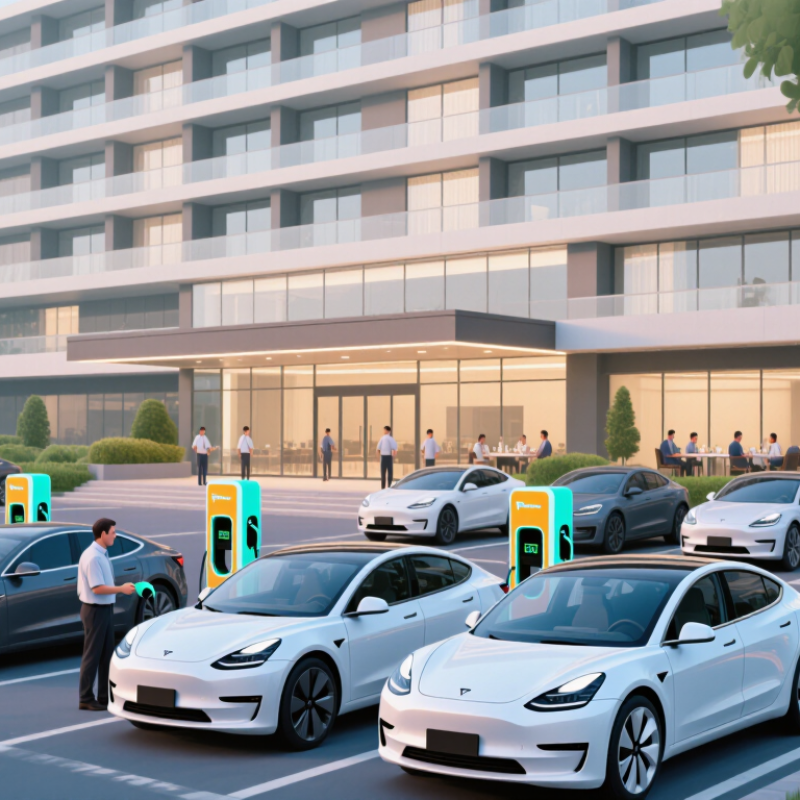
For 2026 buyers, hotel destination charging means more than finding a socket near the lobby. It means arriving with a low battery and leaving after a reliable overnight charge. The service should fit real travel habits, including late check-ins, weekend stays, and limited parking time.
A practical buyer should ask how many charging spaces are available. One charger may look impressive, but it becomes frustrating during a busy holiday. Check connector compatibility, charging speed, payment methods, parking rules, and access hours. Clear pricing matters too. Guests should know whether charging is included, billed by energy, or linked to parking time. Hotel staff also need basic training. A silent screen or unclear cable can ruin an otherwise comfortable stay.
Safety and maintenance deserve close attention. Equipment should be installed according to local electrical standards and inspected regularly. Load management can prevent charging demand from overwhelming the building’s power system. Buyers should review service records, fault response times, and future expansion plans. A charging site that works today may feel inadequate in 2026.
The most useful test is simple. Arrive after dark and try the process as a tired guest. Is the space visible? Is payment obvious? Can help be reached quickly? Some properties still treat charging as an extra feature, not part of the guest experience. That weakness is easy to notice.
2026 Top Hotel Destination Charging Benefits for Buyers?
The IEA’s Global EV Outlook 2025 reports more than 17 million electric cars were sold worldwide in 2024. Electric vehicles represented over 20% of new car sales. This growth changes what travelers expect from hotels. Destination charging can turn parking into a practical guest service. A driver arrives with 18% battery, checks in, and leaves with a much safer travel margin.
For hotel buyers, chargers may improve property appeal and support longer stays. The U.S. Department of Energy’s Alternative Fuels Data Center highlights workplace and destination charging as important parts of everyday charging access. Hotels can charge for electricity, parking, or both. They can also connect charging with room reservations and loyalty benefits. Smart load management may reduce peak-demand pressure. Clear signage matters more than many owners expect.
The business case is not flawless. Some chargers may remain idle during quiet seasons. Electrical upgrades can also cost more than early estimates. Buyers should inspect transformer capacity, cable routes, maintenance records, and expected utilization. Uptime data matters. A broken charger beside a premium room creates a poor guest experience. The IEA’s sales figures are impressive, yet adoption does not guarantee immediate returns at every property. Small pilot installations may be wiser than oversized systems. Hotel buyers should request three-year energy forecasts, charger utilization assumptions, and service-response targets before signing.
Evidence-based market indicators and practical evaluation criteria for hotel destination-charging investments
| Priority | Evaluation Dimension | Verified Data or Calculation | Benefit for Hotel Property Buyers | Buyer Interpretation |
|---|---|---|---|---|
| 1 | Underlying EV demand | Global electric-car sales exceeded 17 million units in 2024, increasing by more than 25% year on year. Electric cars represented more than one-fifth of global new-car sales. | A growing share of guests may expect convenient charging at hotels, resorts, and other overnight destinations. | Treat charging as a guest-service and market-positioning feature rather than only as a parking amenity. |
| 2 | Global charging-network expansion | The number of public charging points worldwide reached nearly 5 million by the end of 2024, according to the International Energy Agency. | Hotels can complement public infrastructure by offering charging where guests already spend several hours. | Properties in areas with limited overnight charging access may have stronger practical value to EV-driving guests. |
| 3 | Overnight energy delivery | A typical AC destination charger rated at 7–22 kW can theoretically deliver 56–176 kWh during an 8-hour overnight stay. Actual energy depends on vehicle limits, load management, and charging losses. | Overnight parking can provide meaningful energy without requiring a separate fast-charging stop. | Verify electrical capacity, charging duration, parking turnover, and whether simultaneous charging is supported. |
| 4 | Guest experience and length of stay | Hotel stays commonly provide longer parking windows than retail or roadside stops; the exact window is determined by the property's check-in, overnight, and checkout patterns. | Charging can be integrated with accommodation, dining, meetings, and leisure activities. | Prioritize locations where vehicles remain parked for several hours and where charging spaces are visible, safe, and easy to access. |
| 5 | Electrical infrastructure readiness | Charger output is constrained by the site's available electrical capacity. Smart load management can distribute a limited electrical supply across multiple chargers instead of requiring every charger to operate at full power simultaneously. | Proper planning can reduce unnecessary grid-upgrade costs and improve charging availability during peak periods. | Request utility capacity records, electrical-panel information, demand-charge details, and a phased expansion plan before purchase. |
| 6 | Revenue and operating model | Charging revenue depends on electricity tariffs, demand charges, installation cost, utilization, payment fees, maintenance, and the property's pricing policy. No universal payback period applies across markets. | The asset may support direct charging income, parking income, room demand, and guest-retention value. | Evaluate charging as part of total property value; do not rely on energy sales alone without a site-specific financial model. |
| 7 | Reliability and maintainability | Real-world availability is affected by hardware faults, network connectivity, payment systems, vandalism, weather, and blocked parking spaces. A single uptime percentage should therefore be verified from site records rather than assumed. | Reliable charging protects guest satisfaction and reduces staff intervention. | Review maintenance logs, fault-response times, warranty terms, remote monitoring, spare-part access, and local service capability. |
| 8 | Future-proofing and interoperability | Charging performance varies by vehicle, connector type, electrical supply, and communication system. Open communication protocols and compliance with applicable national electrical and safety requirements can improve flexibility. | The property is less exposed to a single hardware or software ecosystem and may expand more easily. | Confirm connector compatibility, software data access, roaming capability, cybersecurity controls, and upgrade pathways. |
| 9 | Sustainability and permitting | Charging installations may require electrical, construction, fire-safety, accessibility, signage, and parking approvals. Requirements vary by jurisdiction and property type. | A compliant installation can support sustainability reporting and reduce the risk of later redesign or operational restrictions. | Include permits, accessibility, drainage, cable management, lighting, emergency procedures, and future renewable-energy integration in due diligence. |
Destination charging can change how guests judge a hotel before arrival. A reliable charger adds practical value to business trips and weekend stays. Guests may choose a property where charging fits their travel routine. They can arrive with low battery and leave ready for the next drive. This convenience reduces a small but memorable travel worry. From an operations perspective, chargers create useful touchpoints in the guest journey. Clear signs, visible status information, and safe lighting matter. So does a dependable payment and support process. Small details matter.
Hotels should treat charging as a service, not only equipment. Staff need simple instructions for access, parking, and fault reporting. Housekeeping and front-desk teams can spot blocked spaces or damaged cables quickly. Usage data can reveal peak arrival hours and seasonal demand. That evidence supports better pricing, maintenance schedules, and future capacity planning. Guests notice downtime more than installation promises. One failed session can weaken trust after a long drive. The rollout is rarely perfect. Some sites may have limited power, confusing parking patterns, or low early demand. Reviewing these weaknesses openly helps managers improve the experience.
Tips: Place chargers near well-lit entrances, but avoid premium spaces that frustrate other guests. Add simple instructions beside each unit. Test charging sessions weekly, including payment and network connection checks. Offer realistic time windows instead of promising instant availability. Invite guests to report problems through a visible contact channel. Track repeat stays, satisfaction comments, and charger usage together. Loyalty may grow slowly. That is still valuable evidence.
For hotel buyers in 2026, destination charging should be measured like any other revenue-producing facility. Utilization matters more than the number of installed chargers. A property with eight chargers may appear impressive, yet four daily sessions can reveal weak demand. Track sessions, connected hours, energy delivered, and peak arrival periods. Usage beats headline capacity.
Installation cost includes more than hardware. Site surveys, trenching, electrical upgrades, permits, signage, and maintenance can change the investment sharply. For example, eight chargers may require $40,000 to $70,000 before opening day, depending on grid capacity and parking distance. Record every invoice. Estimates often look cleaner than reality.
Revenue analysis should separate charging income from room bookings, restaurant visits, and longer guest stays. An illustrative site selling four 35-kilowatt-hour sessions daily at $0.35 per kilowatt-hour produces about $17,900 annually before expenses. Payment fees, repairs, electricity demand charges, and software reduce that figure. The math can disappoint. A $50,000 installation might show a three-year payback, but only if utilization remains stable through winter and weekdays. Measure monthly performance for at least twelve months. Review idle chargers, failed sessions, and guest feedback with the same care as occupancy data. A small pilot may provide more reliable evidence than a large installation based on optimistic forecasts.
2026 Top Hotel Destination Charging Benefits for Buyers?
Hotel buyers should compare charging networks as carefully as rooms, parking, and payment systems. The International Energy Agency’s Global EV Outlook 2025 reports that electric car sales exceeded 17 million globally in 2024. More guests will expect dependable charging at overnight destinations.
Network quality matters beyond the number of connectors. Check uptime records, remote fault recovery, roaming access, and transparent pricing. Ask whether the system supports open communication standards, detailed energy reports, and secure user authentication. The U.S. Department of Energy’s Alternative Fuels Data Center identifies Level 2 charging as typically delivering 3.3–19.2 kW. That range can cover overnight stays, but several vehicles may share one circuit. High-power charging needs stronger electrical infrastructure and careful demand management. Bigger is not always better.
Tips: Review twelve months of fault and transaction data, not sales projections. Test the guest journey at night, including payment, cable reach, and parking visibility. Measure successful sessions, average charging time, peak demand, and charger utilization. A dashboard should show these figures clearly. If it only reports revenue, it is incomplete.
Site surveys also deserve attention. A hotel may have spare parking, but not spare electrical capacity. I would avoid oversizing every installation. Still, underpowered equipment can create queues and poor reviews. The honest answer may change after three months of real usage. That is normal.
Common nominal charging-power classes and the ideal time required to deliver 60 kWh. Actual results depend on vehicle limits, battery state of charge, installation capacity, and charging-curve tapering.
Prioritize open-protocol support, roaming capability, remote diagnostics, and transparent transaction reporting.
AC charging generally suits overnight stays, while higher-power DC charging requires greater electrical capacity and may increase installation cost.
Request live status, energy delivered, session history, uptime reporting, fault alerts, and exportable utilization data before purchasing.
More than 17 million electric cars were sold globally in 2024.
Hotels may charge for electricity, parking, or both.
Track charging sessions, connected hours, energy delivered, and arrival periods.
An eight-charger site may cost $40,000 to $70,000 before opening.
Four daily sessions using 35 kilowatt-hours may produce about $17,900 yearly.
A $50,000 installation might show a three-year payback under stable demand.
Check transformer capacity, cable routes, parking distance, permits, and maintenance records.
Review uptime, remote fault recovery, payment access, pricing, and roaming support.
No. Overnight charging may suit many guests without major electrical upgrades.
A small pilot can reveal real demand before a larger investment.
Hotel destination charging is becoming an important amenity for 2026 buyers as electric vehicle adoption continues to grow, with global electric car sales exceeding 17 million in 2024. By offering convenient charging during overnight stays, hotels can attract EV drivers, improve guest satisfaction, encourage longer visits, and strengthen loyalty. Understanding how hotels benefit from destination charging solutions helps buyers connect charging infrastructure with broader hospitality and revenue goals.
A successful investment should be evaluated through practical metrics, including expected utilization, installation and electrical upgrade costs, pricing options, ongoing maintenance, revenue potential, and payback period. Hotels should also compare charging networks based on reliability, power capacity, payment flexibility, reporting tools, and ease of management. A scalable solution with clear usage data can help properties control operating costs, serve different vehicle types, and expand capacity as demand increases. Ultimately, the best charging strategy combines guest convenience, dependable technology, financial value, and long-term adaptability.

LA Charger