The demand for electric vehicles (EVs) is surging globally. In this context, wall-mounted DC chargers are gaining traction among industry buyers. The question arises: what are the advantages of wall mounted DC chargers? According to the latest report by the International Energy Agency, the sale of EVs is projected to rise to over 30% by 2030.
Experts in the field highlight the benefits of these chargers. Dr. Emily Carter, a leader in EV infrastructure research, emphasizes, "Wall-mounted DC chargers provide faster charging solutions, enhancing the user experience." Their compact design allows easy installation in various environments, whether residential or commercial. This flexibility greatly appeals to urban buyers seeking efficient charging options.
Moreover, wall-mounted DC chargers can significantly reduce wait times. Studies indicate that they can charge vehicles up to 80% in under 30 minutes. This speed is crucial as it directly impacts consumer satisfaction. However, some challenges exist, such as installation costs and the need for adequate electrical infrastructure. Overall, understanding the advantages of wall mounted DC chargers can guide global buyers in making informed decisions.
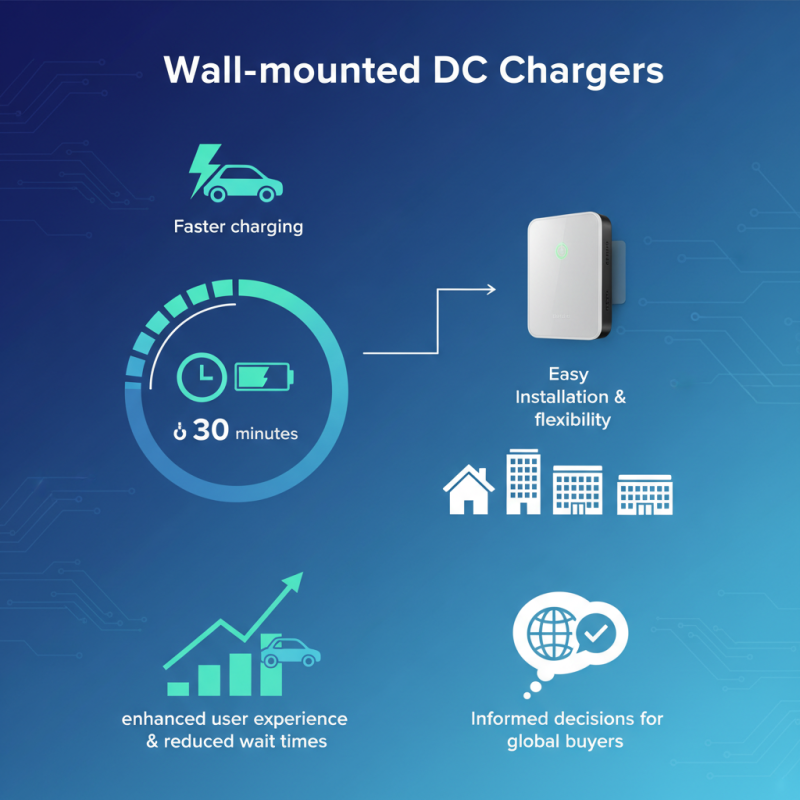
Advantages of Wall Mounted DC Chargers for Global Buyers
Wall-mounted DC chargers are gaining popularity among global buyers. These chargers offer numerous advantages that enhance their value in various settings. Their compact design allows for easy installation in residential, commercial, or public spaces. This flexibility is crucial for urban environments where space is limited. Additionally, they often come with fast charging capabilities, significantly reducing wait times for electric vehicle owners.
The reliability of wall-mounted DC chargers plays a key role in their adoption. Many models feature advanced safety protocols that ensure user and equipment protection. This builds trust among users, ensuring that they feel secure during the charging process. However, it is essential to select chargers that are compatible with different electric vehicle models, as not all options cater to every make or model on the market.
Despite their advantages, there can be drawbacks to consider. Installation costs may vary, and maintenance is necessary over time. Some wall-mounted models lack portability, which can limit usage if not installed properly. Buyers should carefully evaluate their specific needs and preferences before choosing a wall-mounted DC charger. Balancing these factors can lead to a more satisfying experience with the charging infrastructure.
Overview of Wall Mounted DC Chargers: Definition and Functionality
Wall mounted DC chargers serve a critical role in the growing market for electric vehicles (EVs). These chargers convert direct current from a power source to recharge an EV efficiently. According to a report by the International Energy Agency (IEA), the number of electric vehicles on the roads reached 10 million globally in 2020, showcasing an increasing demand for effective charging solutions.
These chargers are designed for both commercial and residential use, making them versatile. Their space-saving design allows installation in locations with limited space, such as parking lots and garages. The Global EV Outlook report highlights that wall mounted options have become increasingly popular due to their rapid charging capabilities, often replenishing an EV battery in about one hour, depending on the vehicle's capacity.
However, challenges remain with wall mounted DC chargers. Their installation often requires significant upfront costs and electrical upgrades. Additionally, users must consider compatibility with different EV types. The American Society of Heating, Refrigerating and Air-Conditioning Engineers emphasizes the importance of ensuring that charging stations align with local building codes and energy regulations. As the EV market evolves, ongoing adjustments to technology and regulations will be essential for maximizing their benefits.
Market Growth: The Rising Demand for DC Fast Charging Solutions
The rise in electric vehicle (EV) adoption is driving significant growth in the DC fast charging market. According to a recent report by Research And Markets, the global DC fast charger market is expected to grow from $5.83 billion in 2023 to $25.41 billion by 2030, reflecting a CAGR of 23.3%. This indicates an increasing need for efficient charging solutions, particularly for urban settings and busy commercial hubs.
Wall-mounted DC chargers offer numerous advantages that resonate with the growing market demand. These chargers are space-saving and can be installed in various locations, from parking lots to walls of commercial buildings. Data from the International Energy Agency highlights that fast charging is essential for user convenience, reducing downtime while charging vehicles. With fast-charging capabilities, EV owners can gain a substantial range in just a short period.
However, the integration of these solutions isn't without challenges. Infrastructure development often lags behind EV sales. The urgent need for increased installation of charging stations must be met to support the surge in EV purchases. Furthermore, different regions have varying regulations that can limit installation speed. Market participants must navigate these complexities to seize opportunities in a rapidly evolving landscape. Data indicates that investment in charging infrastructure remains a critical factor for future success.
Cost Efficiency: Long-term Savings with Wall Mounted DC Chargers
Wall mounted DC chargers offer considerable cost efficiency for global buyers. Their installation is straightforward, saving on labor expenses. These chargers require less maintenance than traditional options, leading to long-term savings. Once set up, many users report minimal upkeep costs. This affordability makes them an attractive choice for businesses and individual consumers alike.
Tips: Consider the total cost of ownership. While initial prices might vary, think about future savings. Evaluate energy efficiency ratings. Higher efficiency can lower operational costs dramatically.
Wall mounted DC chargers also save space. Many chargers can be installed in tight areas. This flexibility can optimize energy distribution across various sites. However, buyers should analyze local infrastructure. Not all locations may have the ideal power supply. It’s vital to assess compatibility before making any commitment.
Space Optimization: Benefits of Compact Design in Urban Environments
Wall mounted DC chargers are rapidly gaining popularity in urban settings. Their compact design significantly optimizes available space. In crowded cities, every square foot counts. These chargers can be installed in tight spots, maximizing efficiency for electric vehicle (EV) owners.
Urban environments often struggle with space constraints. Traditional charging stations require more ground area, making them impractical in certain locations. By contrast, wall-mounted solutions can fit easily in garages, parking lots, or along streets. This adaptability allows for broader access to charging options, particularly in densely populated districts. However, it also raises questions about accessibility for all drivers.
The convenience of these chargers comes with its own challenges. While they save space, their installation must be carefully planned. Not every wall is suitable, and some areas may face electrical limitations. Therefore, proper site assessments are crucial. It’s essential to address these concerns to ensure a reliable and efficient charging network. In the end, the benefits of wall-mounted DC chargers reflect a balance between innovative design and practical limitations.
Advantages of Wall Mounted DC Chargers for Global Buyers - Space Optimization: Benefits of Compact Design in Urban Environments
| Dimension |
Description |
Benefit |
| Compact Design |
Smaller footprint suitable for tight urban spaces |
Maximizes use of available real estate |
| Ease of Installation |
Simpler setup compared to bulkier systems |
Reduced labor costs and installation time |
| Enhanced Accessibility |
Easily mounted on walls in various locations |
Increases charging station availability |
| Aesthetic Integration |
Blends well with building architecture |
Enhances overall visual appeal |
| Sustainability |
Promotes the use of electric vehicles |
Supports green initiatives in urban areas |
Safety Standards: Compliance and Reliability of DC Charger Installation
When considering wall mounted DC chargers, safety standards play a crucial role in their effectiveness. Compliance with regulatory standards ensures that installations are reliable and meet the demands of users. This is particularly important in a global context where safety practices can vary.
Adhering to safety regulations reduces the risk of electrical hazards. It involves thorough inspections and quality checks during the installation process. Professionals must guarantee that all equipment is tested and certified according to established norms. This can foster trust among users, knowing that their chargers meet essential safety criteria.
However, not all installations comply, and some may overlook crucial aspects. For example, improper wiring can lead to serious accidents. Users should ensure they hire certified professionals for installation. Reflecting on the installation process can reveal areas for improvement. Safety must always be a priority, especially in the rapidly evolving world of electric vehicle charging.
FAQS
: The significant rise in electric vehicle adoption is fueling market growth.
The market is projected to grow from $5.83 billion in 2023 to $25.41 billion by 2030.
They save space and can be installed in various locations, improving convenience.
Fast charging reduces downtime, allowing drivers to gain substantial range quickly.
Infrastructure development often lags behind EV sales, causing installation delays.
Their straightforward installation and low maintenance lead to long-term savings.
Focus on long-term savings and energy efficiency, not just initial costs.
Not all locations have the ideal power supply; compatibility must be assessed.
They offer installation in tight areas, which optimizes energy distribution.
Investment in charging infrastructure is essential for future opportunities.
Conclusion
Wall mounted DC chargers have become increasingly popular among global buyers due to their numerous advantages. Key benefits include their compact design, which allows for efficient space optimization, especially in urban environments where real estate is at a premium. Additionally, the rising demand for DC fast charging solutions highlights the market growth of these devices, positioning them as essential for supporting electric vehicle infrastructure.
Cost efficiency is another significant advantage, as wall mounted DC chargers can lead to long-term savings for businesses and consumers alike. Furthermore, adherence to safety standards ensures reliability in installation and operation, making them a trustworthy choice for users. In summary, when considering what are the advantages of wall mounted DC chargers, factors such as space optimization, cost savings, and safety compliance make them a sound investment in the growing electric vehicle market.

 LA Charger