5 Best Ways to Solve Multi Unit DC Charging Challenges?

Time:2026-10-08 Author:Charlotte
0%

Installing direct-current chargers in a multi-unit building sounds simple until the first load study begins. The parking spaces may sit far from the electrical room. Existing switchgear may have little spare capacity. A single 150-kilowatt charger can also compete with elevators, heat pumps, lighting, and household demand.

This explains what makes multi-unit residential dc charging challenging. The difficulty is rarely the charger alone. It involves shared parking, unpredictable charging times, utility upgrades, resident billing, fire-safety planning, and fair access. “The hardest part is often not the charger; it is coordinating the building, the grid, and the residents,” says Michael Nicholas, a transportation electrification researcher at the University of California, Berkeley. His observation captures the practical problem well, even if every property behaves differently.

This guide examines five workable approaches. They include managed charging, phased electrical upgrades, load balancing, transparent payment systems, and careful site design. A property manager might begin with four chargers instead of twenty. A smart energy-management system can delay charging at 6 p.m., when residents return home and cooking loads rise. Clear reservation rules can prevent one driver from occupying a connector overnight.

Some assumptions deserve reconsideration. More chargers do not automatically create better service. Faster charging may also increase infrastructure costs and monthly fees. A technically elegant design can still fail if residents cannot understand it. Reliable deployment requires measured demand, resident feedback, utility coordination, and room for future expansion. The best solution is practical, visible, and slightly adaptable.
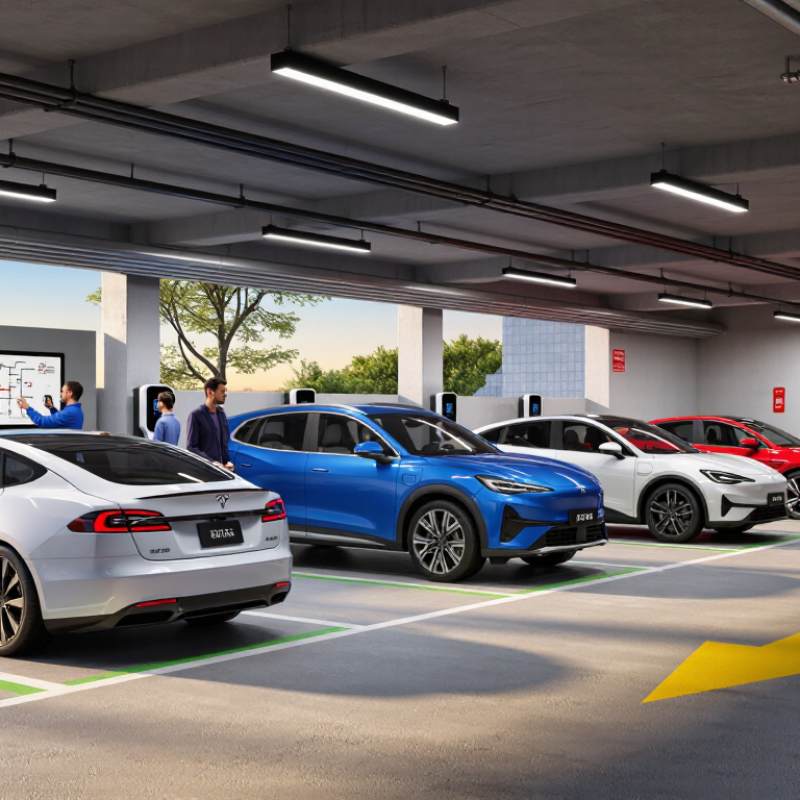
5 Best Ways to Solve Multi Unit DC Charging Challenges?

Assess Site Power Capacity and Charging Demand

Assessing site power capacity is the first practical step in solving multi-unit DC charging challenges. The IEA’s Global EV Outlook 2024 reports nearly 14 million electric cars were sold worldwide in 2023. Charging demand is rising quickly, but grid capacity often grows slowly.

A site with a 500 kVA transformer cannot safely deliver 500 kW continuously. Building loads, ventilation, elevators, and future expansion reduce the usable margin. The U.S. Department of Energy’s Alternative Fuels Data Center identifies DC fast charging equipment commonly ranging from 50 kW to more than 250 kW. Four chargers can therefore exceed a small commercial connection within minutes. Engineers should record peak demand, transformer rating, service voltage, cable distance, and available spare capacity. A 15-minute load profile is more useful than a monthly electricity bill. Still, estimates can be wrong. Seasonal peaks and simultaneous vehicle arrivals are easy to underestimate.

Tips: Measure the site for at least seven days. Interview drivers about arrival times and dwell periods. Model worst-case charging, not average behavior. Use managed charging to stagger sessions and protect the transformer. Consider on-site storage only after confirming its lifecycle cost and safety requirements. The IEA also notes that public charging infrastructure must expand substantially this decade, so reserve space for additional switchgear and conduits. Planning too tightly creates expensive rework later.

5 Best Ways to Solve Multi-Unit DC Charging Challenges

Assess site power capacity and simultaneous charging demand before adding more DC chargers.

The chart compares available site capacity with estimated peak charging demand across five representative depot configurations. The planning values use common DC charger ratings and realistic simultaneous-use assumptions. Keep spare capacity by verifying the utility connection, applying managed charging, staggering vehicle sessions, adding onsite energy storage, and upgrading the electrical service when demand consistently approaches capacity.

Choose the Right Multi-Unit Charging Architecture

Choosing the right multi-unit charging architecture is the hardest part of solving DC charging challenges. A large cabinet with several dispensers can reduce equipment duplication, but it may create a single point of failure. Distributed power modules offer better resilience, although they need more space and careful cable planning. Field commissioning often exposes this trade-off.

The International Energy Agency reported that public charging points grew by about 40% in 2023, while fast-charging capacity expanded even faster. Capacity must grow without overwhelming the site transformer. Dynamic load management can allocate power between vehicles, protect peak demand limits, and keep queues moving. It is not magic. Poor settings still produce slow sessions.

A practical design combines modular power conversion, spare capacity, thermal monitoring, and clear maintenance access. The National Renewable Energy Laboratory estimates that the United States may need roughly 182,000 public DC fast-charging ports by 2030. That scale makes interoperability and remote diagnostics essential. Choose open communication standards where possible. Keep failed modules replaceable. Test simultaneous charging under real temperature conditions, not only in a quiet laboratory. A smaller architecture with dependable uptime may outperform a larger system that looks impressive on paper.

Balance Loads with Smart Energy Management

Multi-unit DC charging becomes difficult when every vehicle arrives at once. Smart energy management turns that bottleneck into a controlled operating plan. The IEA’s Global EV Outlook 2024 reports more than four million public charging points worldwide by the end of 2023. That growth makes load coordination essential, not optional.

Five practical methods work together: measure building demand, set a site power limit, schedule charging by departure time, balance power between vehicles, and store energy for short peaks. Dynamic load management can reduce expensive demand spikes while keeping chargers active. The U.S. Department of Energy recommends managed charging because it aligns charging with grid conditions and facility needs. However, perfect predictions are unrealistic. Drivers change plans, and a small software error can leave one vehicle waiting longer than expected. Operators should review charging data weekly and adjust priority rules.

Tips: Begin with a 30-day load study. Install smart meters at the main panel and charger groups. Use departure times, battery levels, and minimum charging targets. Keep a reserve for emergency arrivals. Test the system during the busiest evening hour, not during quiet periods. The IEA also notes that fast-charging demand can grow rapidly in dense areas, so expansion plans should include transformer capacity and future vehicles. A simple dashboard should show power use, queue length, session failures, and missed departure targets. These details expose weak assumptions early.

5 Best Ways to Solve Multi Unit DC Charging Challenges? - Balance Loads with Smart Energy Management

No. Smart Energy Management Method Primary Challenge Addressed How It Works Key Operating Metric Practical Benefit Implementation Consideration
1 Set a Site Power Limit Simultaneous charging can exceed the site's transformer, switchgear, or utility service capacity. Define a maximum charging-power limit below the available electrical capacity and continuously adjust charger output to remain within it. Total site load in kW compared with the configured power limit. Reduces overload risk, nuisance breaker trips, and the need for immediate service upgrades. The limit should account for building loads, HVAC demand, seasonal variation, and electrical-code requirements.
2 Use Dynamic Load Balancing Fixed power allocation leaves some vehicles undercharged while other charging points are idle. Distribute available power in real time according to connected vehicles, charging status, departure needs, and site demand. Charger utilization, assigned kW per vehicle, and completed energy in kWh. Improves use of existing infrastructure and can increase the number of vehicles served without increasing peak capacity. The control system needs reliable meter data and communication with each charger.
3 Prioritize Vehicles by Departure Time Equal charging treatment may cause vehicles with urgent mobility needs to miss their required departure charge. Rank charging sessions using departure time, required energy, battery state of charge, and vehicle usage priority. Percentage of sessions reaching the requested energy target before departure. Makes limited power more useful when many vehicles are connected at the same time. Users should provide realistic departure times and energy targets; inaccurate inputs reduce scheduling quality.
4 Schedule Charging During Off-Peak Periods Charging during high-demand periods can increase electricity costs and contribute to local peak demand. Delay flexible charging to lower-demand or lower-price periods while preserving each vehicle's required departure energy. Peak demand in kW, charging cost per kWh, and energy shifted outside peak hours. Can reduce demand-related charges where the applicable electricity tariff includes them. Tariff schedules vary by location and utility; charging rules must not compromise operational availability.
5 Integrate On-Site Generation and Battery Storage Grid capacity constraints, renewable-power variability, and short-duration demand spikes can limit charging availability. Use local renewable generation when available and discharge stationary storage during charging peaks, subject to system limits. Self-consumed renewable energy, battery state of charge, peak-grid import, and round-trip efficiency. Supports peak shaving and can improve resilience when correctly sized and controlled. Battery sizing must consider usable capacity, power rating, temperature, degradation, fire safety, and replacement planning.

Recommended monitoring set: site demand (kW), charging energy (kWh), charger utilization, session completion rate, peak demand, charging cost, and renewable-energy contribution.

Plan Installation, Safety, and Regulatory Compliance

Planning a multi-unit DC charging site begins with a detailed electrical load study. Measure existing demand, future expansion, and peak charging periods. A diversity calculation can prevent expensive oversizing. Inspect the parking surface, cable paths, drainage, lighting, and emergency access. Keep charging bays accessible and easy to maintain. Do not assume the existing service can handle the load.

Safety must shape the layout, not decorate it afterward. Use correctly rated breakers, residual-current protection, surge protection, and reliable grounding. Separate power cables from pedestrian routes where possible. Protect connectors from standing water, vehicle impact, and sharp edges. Provide clear emergency shutoff controls. Good ventilation and thermal monitoring also matter in enclosed equipment areas. Small details prevent serious failures.

Regulatory compliance requires early coordination with electrical authorities, fire officials, property owners, and accessibility specialists. Confirm permits, clearance distances, signage, inspection rules, and local grid requirements before construction. Use qualified installers and document test results during commissioning. Train staff to respond to faults, damaged cables, and emergency isolation. Schedule inspections after severe weather and heavy use. Field teams often find problems that drawings miss. A site may pass an initial review yet perform poorly during peak demand. That uncomfortable gap deserves attention. Review energy data, user complaints, and maintenance records regularly, then revise the operating plan when evidence changes.

Monitor Performance and Optimize Long-Term Operations

Managing several DC charging units requires more than checking whether each session starts. Operators should track uptime, charging speed, connector faults, energy use, and peak demand every day. A live dashboard can reveal one unit delivering less power than others, even when its screen shows normal status. Record cabinet temperature and ventilation conditions as well. Heat often explains performance loss before a serious fault appears. Field experience shows that small inconsistencies become expensive when ignored.

Tips: Compare actual output with the expected power range. Review failed sessions by location, time, vehicle type, and connector. Set alerts for repeated resets or unusual temperature changes. Keep a simple maintenance log with inspection dates and corrective actions. Do not rely on one metric. Energy consumption can look normal while charging time quietly increases.

Long-term optimization depends on clean data and practical routines. Schedule inspections before heavy-use periods, and test protective systems according to qualified service procedures. Balance charging demand across units when the site approaches its electrical limit. This can reduce equipment strain and avoid unnecessary infrastructure upgrades. However, automatic load management is not always perfect. It may delay a vehicle unexpectedly, especially during simultaneous charging. Review user complaints beside system data, then adjust power rules carefully. Replace worn connectors promptly, because loose contact can create heat, errors, and inconsistent charging. A monthly performance review also helps separate temporary network issues from hardware problems.

FAQS

Why is smart energy management important for multi-unit DC charging?

Several vehicles may arrive together. Smart management controls total power and reduces sudden demand spikes. It keeps chargers active without exceeding site limits.

What information should operators use when scheduling charging?

Use departure times, battery levels, and minimum charging targets. Keep a small power reserve for unexpected arrivals. Plans are never perfect.

How can a site determine its suitable power limit?

Begin with a 30-day load study. Measure the main panel, charger groups, and evening peaks. Do not assume the existing electrical service is sufficient.

What safety details should a charging site include?

Use correctly rated breakers, grounding, residual-current protection, and surge protection. Protect cables from vehicles, water, sharp edges, and walking paths. Provide visible emergency shutoff controls.

How should operators prepare the installation area?

Inspect parking surfaces, drainage, lighting, cable routes, and emergency access. Keep charging bays clear and easy to maintain. Small layout mistakes become expensive later.

Which performance data should operators monitor daily?

Track uptime, charging speed, connector faults, energy use, peak demand, and session failures. Also record cabinet temperature and ventilation conditions.

How can operators identify a weak or failing charging unit?

Compare actual output with the expected power range. Look for repeated resets, slower sessions, unusual heat, or one unit delivering less power. A normal screen can still hide poor performance.

What should operators do when automatic load management delays a vehicle?

Review the vehicle’s departure target beside system records and user feedback. Adjust priority rules carefully. The software may be correct, but not always fair.

How often should charging systems and operating rules be reviewed?

Review charging data weekly and conduct a broader performance review monthly. Inspect equipment before heavy-use periods and after severe weather. Evidence should change the plan when necessary.

Conclusion

Multi-unit DC charging can deliver fast, convenient charging for apartments, workplaces, and shared parking facilities, but successful deployment requires careful planning. Understanding what makes multi-unit residential dc charging challenging begins with evaluating available site power, expected charging demand, parking patterns, and future expansion needs. These factors help determine whether a centralized, distributed, or modular charging architecture is the most practical choice.

A reliable project should also include smart energy management to balance loads, limit peak demand, and prioritize vehicles when capacity is constrained. Installation plans must address cabling, ventilation, accessibility, emergency procedures, and applicable electrical and building requirements. After commissioning, continuous monitoring of energy use, charger availability, faults, and user demand can reveal opportunities for improvement. Regular maintenance, software updates, and periodic capacity reviews help control operating costs, improve reliability, and ensure the charging system continues to meet residents’ or drivers’ needs as usage grows.

Charlotte

Charlotte

Charlotte is a seasoned marketing professional with a deep understanding of the company's portfolio and a passion for elevating its presence in the market. With a keen eye for detail and a commitment to excellence, she ensures that our professional blog is regularly updated with insightful articles......