High Efficiency DC Power Modules are transforming the way we think about power systems. These modules provide reliable energy conversion and management. Their efficiency leads to reduced energy waste, making them an appealing option for various applications.
In modern electronics and renewable energy, High Efficiency DC Power Modules play a crucial role. They are commonly used in solar inverters and electric vehicles. Their compact design allows for space-saving solutions. The benefits include lower operational costs and improved performance.
However, implementing these modules can be challenging. The initial investment may deter some adopters. It's crucial to weigh the long-term gains against upfront costs. As technology evolves, organizations must constantly evaluate their needs. The focus should be on balancing efficiency with practicality. High Efficiency DC Power Modules offer significant potential, yet they require thoughtful integration into existing systems.
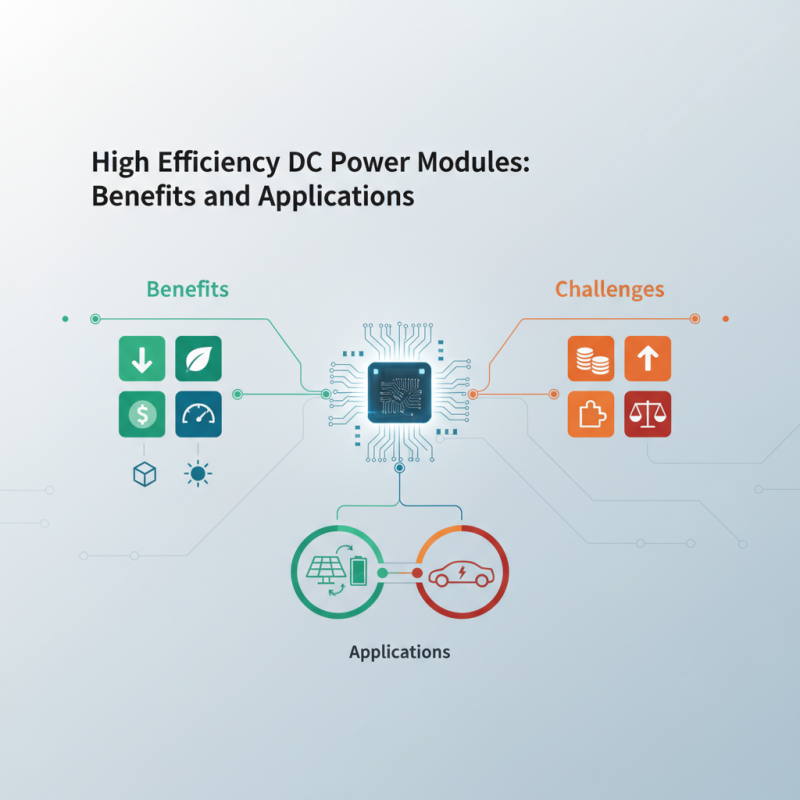
High efficiency DC power modules are transforming various industries. These modules convert DC voltage to desired levels while minimizing energy loss. This technology is crucial in sectors like renewable energy. For instance, solar panels produce direct current (DC) and require efficient conversion for practical use. Reports suggest that high efficiency power modules can improve overall system efficiency by up to 15%.
In data centers, energy consumption is a pressing issue. A study highlighted that almost 30% of energy is wasted in inefficient power distribution. High efficiency DC power modules can mitigate this waste. They operate at higher efficiencies compared to traditional systems, in some cases exceeding 95%. However, achieving this efficiency often requires expensive components and complex designs.
Challenges remain in integrating these modules into existing infrastructure. Some installations require retrofitting, which can disrupt operations. Organizations need to consider the trade-offs between upfront costs and long-term savings. Balancing these factors can lead to tough decisions. Nonetheless, the push for sustainable solutions makes this technology increasingly relevant.
High efficiency DC power modules offer significant benefits for various applications. They enhance energy conservation and reduce operational costs. By converting power more effectively, these modules minimize waste, which is critical in today’s energy-conscious environment. Additionally, efficient power conversion can lead to lower heat generation, which is vital for maintaining system reliability.
In industrial settings, high efficiency DC power modules can drive motors, sensors, and other devices reliably. Their compact design saves space, making them suitable for densely packed systems. However, achieving such efficiency is not always straightforward. Engineers must consider factors like load conditions and cooling methods. The temptation to prioritize other features might overshadow the focus on efficiency.
These modules are particularly useful in renewable energy systems. They can optimize the performance of solar panels and wind turbines. Despite their advantages, the upfront cost may be daunting for some. This makes it crucial for companies to analyze long-term benefits versus initial investments. Ultimately, embracing high efficiency DC power modules requires both technical understanding and strategic planning.
High efficiency DC power modules are transforming various industries. Their applications span telecommunications, renewable energy systems, and electric vehicles. Improving energy efficiency is crucial. Reports indicate that companies save up to 30% on energy costs by utilizing these modules.
Telecommunications benefit significantly from high efficiency DC power modules. Equipment often requires stable and reliable power. The National Renewable Energy Laboratory notes that integrating such modules can reduce total cost of ownership. Reliability is a key factor in this sector. Disruptions due to power issues can lead to substantial financial losses.
Tips: Consider the environmental impact. High efficiency power modules not only save money but also reduce carbon footprints. Explore how these modules can improve functionality in powering electric vehicles. Data shows a growing trend towards EVs. Companies installing efficient modules prepare better for future demands. Integration can sometimes be challenging, so careful planning is vital. Embrace the learning curve.
When designing high efficiency DC power modules, several key factors must be considered. Thermal management plays a crucial role. Poor heat dissipation can lead to failure. According to recent industry reports, improper thermal design can reduce efficiency by over 15%. Engineers must select materials that can withstand high temperatures while maintaining good conductivity.
Efficiency also relies on component selection. Capacitors and inductors used in the design should support low Equivalent Series Resistance (ESR). This reduces heat generation and energy loss. Choosing the right semiconductor components is equally vital. High-performance transistors can increase the overall efficiency by up to 10%. However, these enhancements often raise the design complexity. Engineers need to balance performance with system reliability.
Another significant consideration is size and weight. Compact designs are often preferred in modern applications. Yet, squeezing components into smaller spaces can strain thermal performance. The power density must be evaluated carefully. Industry statistics suggest that large power modules can miss efficiency targets by 20% when improperly sized. A well-thought-out design can avoid these pitfalls.
The future of high efficiency DC power modules is promising and challenging. These devices are vital in the transition toward sustainable energy. As industries adopt renewable sources, the demand for efficient power conversion rises. Innovations focus on making these modules smaller and lighter. This shift can aid in better integration into various applications.
One exciting trend is the use of advanced materials in production. These materials can improve thermal management. Better heat dissipation leads to increased performance. However, the cost of new materials might pose a barrier. Companies must weigh performance gains against manufacturing expenses.
Additionally, the integration of smart technology is on the horizon. Smart modules will offer real-time monitoring and diagnostics. This capability can enhance reliability and efficiency. Yet, the complexity of these systems could introduce new challenges. Proper training and understanding will be essential for manufacturers and users alike. The growing digital landscape requires ongoing adaptation.
: They improve energy efficiency and can save companies up to 30% on energy costs.
They provide stable power, reducing financial losses from disruptions.
Thermal management, component selection, size, and weight are crucial factors.
Poor heat dissipation can lead to module failure and reduce efficiency by over 15%.
Materials must withstand high temperatures while ensuring good conductivity.
Using capacitors and inductors with low ESR reduces heat generation and energy loss.
Smaller designs can strain thermal performance and impact overall efficiency.
Balancing performance improvements with reliability can complicate engineering decisions.
They can enhance overall efficiency by up to 10%, but may complicate the design.
Oversized power modules can miss efficiency targets by 20% if not properly designed.
High Efficiency DC Power Modules are becoming increasingly important in modern electrical systems due to their ability to deliver superior performance and reduced energy consumption. These modules are designed to optimize power conversion, which leads to enhanced energy efficiency and lower operational costs. Key benefits include their compact size, thermal performance, and the ability to operate effectively in various environments, making them suitable for a wide range of applications such as telecommunications, industrial automation, and renewable energy systems.
In designing High Efficiency DC Power Modules, engineers must consider factors such as thermal management, regulatory compliance, and reliability. As technology evolves, future trends indicate an ongoing shift towards even higher efficiencies, advanced power density, and smarter integration in broader energy systems. This progression will continue to drive innovations that enhance the performance and applicability of High Efficiency DC Power Modules across different sectors.

LA Charger