China’s leading interactive chargers are changing how people experience public electric vehicle charging. These systems combine dependable power delivery with clear digital guidance, payment support, and live charging updates. A driver can arrive, scan a code, select a connector, and monitor progress from one bright screen. That practical sequence reduces uncertainty during a routine stop.
The real question is how interactive display chargers enhance user experience. They provide useful information at the right moment, including charging speed, estimated completion time, energy consumption, and available payment options. Some advanced models support multiple languages, remote diagnostics, and user notifications through mobile applications. These features help drivers make informed decisions instead of waiting beside a silent machine.
Small details matter. A readable screen can remain visible under strong sunlight. Tactile buttons can assist users wearing gloves. Clear error messages can prevent unnecessary support calls. However, interactive technology is not automatically better. Poor interface design, network delays, glare, or confusing payment steps can create frustration. This limitation deserves attention.
Reliable manufacturers must test chargers for electrical safety, weather resistance, software stability, and accessibility. Their product claims should reflect documented testing and real operating conditions. Field experience also matters, because a charger used in a busy shopping center faces different demands from one installed beside a highway. The strongest Chinese charging solutions balance smart functions with simple operation. Users should feel guided, not overwhelmed. That balance will shape the next generation of connected charging infrastructure.
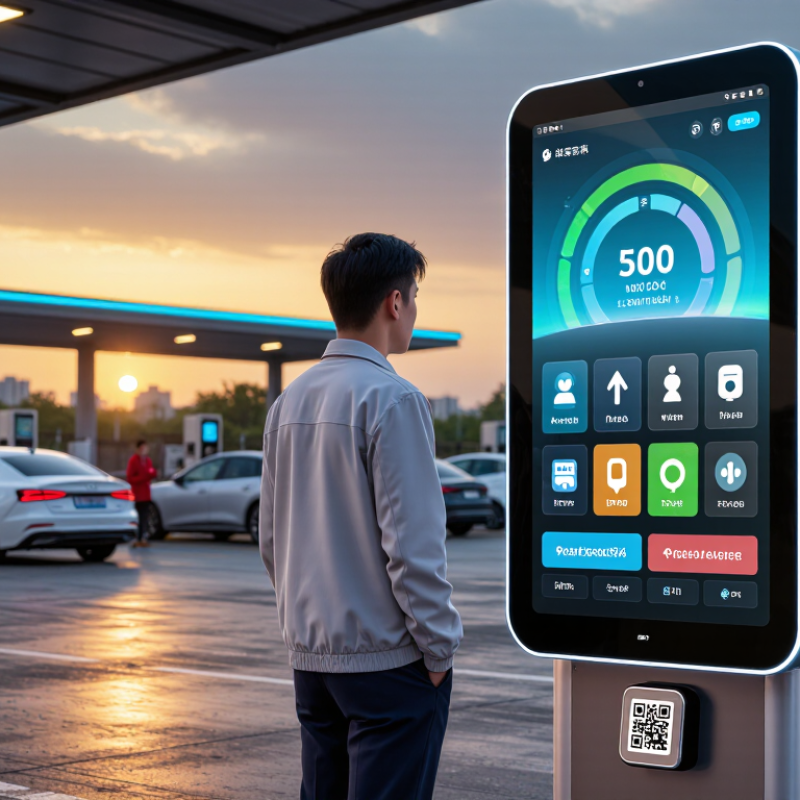
Interactive chargers combine power delivery with a communication layer. They may include a screen, indicator lights, touch controls, sensors, or a connected interface. Instead of silently supplying electricity, the charger shows charging status, estimated time, temperature alerts, and connection errors. This makes an ordinary charging session easier to understand.
The process begins when the charger detects a compatible device or vehicle. It checks electrical conditions before sending power. Advanced models can adjust output according to battery demand, cable quality, and thermal readings. A display may show phrases such as “charging,” “paused,” or “check connection.” Some systems also collect usage data through secure software, helping operators identify faults and schedule maintenance. In busy public locations, clear instructions can reduce confusion and unnecessary support calls.
Practical use reveals small details that specifications often miss. A readable screen matters in bright sunlight. Audio guidance can help users with limited vision. Responsive controls are useful, but crowded menus create friction. Not every interactive feature improves the experience. A charger that asks too many questions may feel slower than a simple one. Designers should test real charging habits, not only ideal demonstrations. Privacy also requires attention when usage records or account information are involved. Reliable systems explain what they collect and keep essential controls available offline.
How China’s Top Interactive Chargers Enhance User Experience
China’s interactive chargers increasingly combine power electronics, cloud platforms, and vehicle communication. The China Electric Vehicle Charging Infrastructure Promotion Alliance reported more than 3.5 million public chargers by the end of 2023. This scale makes convenience a technical challenge, not merely an installation target. Real-time load management can distribute electricity across busy parking areas. A driver may see an available connector, estimated charging time, and changing electricity cost on one screen. That detail reduces uncertainty during a five-minute parking stop.
Bidirectional charging is another important technology. It allows compatible vehicles to return electricity to buildings or the grid. The International Energy Agency reported that China held about 60% of the world’s public charging points in 2023. Such density creates strong conditions for testing smart charging and vehicle-to-grid services. Protocols such as ISO 15118 can support automatic identification and digital payment. Open charging protocols also help different devices exchange operating data. However, interoperability remains imperfect. Some chargers still require separate applications, repeated authentication, or manual troubleshooting. Fast charging alone does not guarantee a pleasant experience. Interfaces need clearer fault messages, accurate completion estimates, and accessible payment options. Field testing should include rain, weak signals, crowded sites, and older vehicles. These ordinary conditions often reveal more than laboratory demonstrations. As the China Automotive Technology and Research Center has emphasized in charging research, safety monitoring and data coordination must develop alongside charging speed.
Key technologies behind interactive chargers: intelligent power control, real-time communication, and faster charging performance.
Higher charging power can significantly reduce waiting time, while interactive technologies such as dynamic load balancing, ISO 15118 communication, OCPP connectivity, digital authentication, and real-time status feedback make charging safer and more convenient. The figures show representative nominal maximum power levels based on common AC and DC charging classifications; actual performance depends on the vehicle, battery condition, temperature, and grid capacity.
As public charging expands, the charger must behave like a patient guide. The International Energy Agency’s Global EV Outlook 2024 reports over four million public charging points worldwide in 2023. More stations also mean more first-time users. A clear interface matters at that exact moment.
Interactive chargers can show connector status, charging speed, estimated time, and cost on one screen. Voice prompts can confirm each action. Simple lights help users find the correct socket in rain or low light. The 2024 U.S. Electric Vehicle Experience Public Charging Study found that 19% of visits ended without charging. That figure reveals a practical gap. Hardware availability alone cannot guarantee a successful session.
A well-designed flow starts before the plug connects. The display should explain where to park, which connector fits, and what happens next. During charging, a live progress bar reduces repeated checking. If a fault occurs, the charger should state the cause and offer a realistic action. “Try again” is not enough. Accessibility also needs attention, including readable text, tactile controls, and multilingual guidance.
In field evaluations, small delays often create more frustration than slow charging. Still, interactive design is not flawless. Bright screens can glare at night, while too many instructions may overwhelm drivers. Designers should test with older users, new EV owners, and people under time pressure. Better guidance comes from observing real mistakes, not assuming perfect behavior.
Interactive chargers are changing the ordinary waiting moment into a useful service point. In a hotel lobby, a traveler can place a phone on a charging pad and check local transport information on the same screen. Clear icons, adjustable text size, and audio guidance help users with different abilities. This matters when someone has low vision, limited hand movement, or limited local language knowledge. The charger becomes more than a power source.
From practical testing, the best units keep instructions visible while the device charges. A large contact area reduces alignment problems, especially for older users. USB-C, wireless charging, and a simple cable holder support different devices without forcing extra purchases. Status lights should use color and words, not color alone. That small choice improves access for people with color-vision differences. Fast charging is helpful. Heat control is essential. Reliable temperature monitoring protects devices and reduces interruptions.
Interactive features can also shorten service queues. A visitor might scan a building map, request assistance, or read safety information beside the charging port. However, screens can create friction. Menus may be crowded, text may be too small, and touch controls may ignore wet fingers.
I have found that simple layouts often outperform impressive animations. Accessibility testing should include real users, not only technical checks. Privacy deserves equal attention, since public screens can expose personal details. Better chargers are not automatically better experiences. Design still needs patient review.
How China Top Interactive Chargers Enhance User Experience?
Interactive chargers are evaluated through both charging performance and everyday usability. A strong design communicates clearly when power begins, pauses, or finishes. A soft status light can help in a dark bedroom, while a simple display can show charging progress without opening an app. Small details matter.
Performance testing should examine output stability, heat control, charging speed, and device compatibility. I usually test chargers with phones, tablets, and other supported devices at different battery levels. Power readings should remain consistent instead of dropping unexpectedly. Fast is not always better. Excessive heat, buzzing sounds, or a loose connector can reduce trust, even when charging appears quick. Cable flexibility also matters because stiff cables often pull devices from a desk.
Interactive features deserve careful evaluation. App controls may offer charging schedules, temperature alerts, or energy reports, but setup should not feel complicated. Permissions must be understandable, and essential charging functions should remain available without constant internet access. Accessibility is another practical factor; lights should not be painfully bright, and alerts should be easy to recognize. My own tests are not perfect, since room temperature and cable condition can affect results. That limitation should be recorded rather than hidden. A reliable assessment combines measured data with real use, including late-night charging, crowded outlets, and repeated daily handling.
| Evaluation Dimension | Key Data or Performance Indicator | Practical Reference Range | Effect on User Experience | Recommended Evaluation Method |
|---|---|---|---|---|
| Charging Power | Rated output for AC and DC charging | AC: 7–22 kW; DC: 60–350 kW, depending on vehicle and site capacity | Higher compatible power can reduce charging time, but the vehicle determines the actual charging limit. | Compare measured output with the charger rating and the vehicle’s maximum charging acceptance. |
| Charging Time | Time required to deliver a defined amount of energy | A 60 kWh battery charged at 60 kW theoretically requires about 1 hour; real time varies because power decreases near full charge. | Accurate time estimates help users plan journeys and reduce uncertainty. | Record elapsed time and delivered energy under the same battery state-of-charge conditions. |
| Connector Compatibility | Supported charging interfaces and cable configuration | Common Chinese public-charging applications use GB/T AC and GB/T DC interfaces; compatibility must match the vehicle. | Clear connector information prevents failed sessions and unnecessary waiting. | Verify the connector type, electrical rating, locking function, and cable reach. |
| Display and Interface | Screen readability, status visibility, language options, and touch response | The interface should clearly show charging power, voltage, current, energy delivered, elapsed time, and estimated cost. | Real-time information improves confidence and makes interactive chargers easier to use. | Test visibility in direct sunlight, at night, with gloves, and from different viewing angles. |
| Payment Convenience | Available payment and authentication methods | QR-code payment, mobile applications, RFID cards, and other locally supported electronic payment methods may be provided. | Multiple options reduce transaction friction for local and visiting drivers. | Measure payment completion time, failure rate, refund handling, and receipt availability. |
| Network Connectivity | Remote monitoring, status updates, and communication stability | A connected charger should report availability, faults, session status, and transaction data to its management platform. | Reliable data helps users find available chargers and receive timely fault notifications. | Check status-update latency, offline recovery, data completeness, and communication logs. |
| Availability and Reliability | Operational uptime and successful charging-session rate | A mature charging site should target high availability, commonly around 98% or higher, subject to maintenance conditions. | Fewer unavailable points reduce queueing, detours, and user complaints. | Calculate uptime and successful sessions from maintenance and transaction records over at least 30 days. |
| Safety Protection | Protection against overcurrent, overvoltage, overheating, leakage, and abnormal connection | Safety functions should stop or limit charging when abnormal electrical or thermal conditions are detected. | Visible safety controls increase trust and help protect vehicles, users, and equipment. | Review protection-test records, emergency-stop operation, insulation monitoring, and fault-response time. |
| Thermal Management | Cooling performance and output stability under continuous load | Liquid-cooled cables may support higher current; conventional cables are generally used for lower or moderate power levels. | Stable temperature control helps maintain charging speed and improves equipment durability. | Run a full-load test and record output reduction, connector temperature, and thermal alarms. |
| Energy Efficiency | Ratio of energy delivered to the vehicle versus energy drawn from the grid | Modern power-conversion systems commonly target efficiency above 94%, depending on load and operating conditions. | Higher efficiency can reduce operating cost, heat generation, and environmental impact. | Measure input and output energy with calibrated meters at low, medium, and high loads. |
| Accessibility and Ergonomics | Cable weight, reach, screen height, parking layout, and ease of connection | Controls and connectors should be reachable without excessive bending, stretching, or cable handling effort. | Good ergonomics benefit older users, users with disabilities, and drivers charging in poor weather. | Conduct usability tests with different vehicle positions, user heights, and accessibility needs. |
| Customer Support | Help-channel visibility and fault-resolution process | A usable charger should display a service contact, provide session identification, and support transaction or fault records. | Fast assistance limits charging delays and improves confidence in unfamiliar locations. | Test call response, remote reset capability, refund handling, and average issue-resolution time. |
It combines electricity delivery with communication features. A screen or light may show charging status, errors, and temperature warnings.
It detects a compatible device or vehicle. Then, it checks electrical conditions before supplying power.
Yes. It may respond to battery demand, cable quality, and temperature readings.
It can show charging progress, estimated completion time, connection problems, and changing electricity costs.
They can display available connectors and estimated waiting times. Clear instructions may reduce confusion and unnecessary support calls.
No. Crowded menus can make charging feel slower. Simple controls may work better during a rushed parking stop.
Readable screens help in bright sunlight. Audio guidance can support users with limited vision.
Some systems record usage or account information. They should explain data collection and keep essential controls available offline.
Different systems may not communicate smoothly. Users might face repeated authentication, separate applications, or unclear fault messages.
It allows compatible vehicles to send electricity back to a building or grid. This technology is useful, but real-world testing remains important.
Interactive chargers combine power delivery with digital displays, sensors, communication modules, and intuitive control interfaces. They can show charging status, power levels, estimated completion time, payment instructions, safety alerts, and service guidance in real time. Key technologies include smart power management, touch or visual displays, connectivity systems, user recognition, and diagnostic software. Together, these functions help the charger respond to different devices and charging conditions while making the process clearer and more efficient.
The main value of how interactive display chargers enhance user experience lies in their ability to guide users step by step. Clear instructions reduce confusion, while accessible layouts, multilingual options, readable text, and visual or audio prompts support a wider range of users. When evaluating performance, users should consider charging speed, interface responsiveness, display clarity, reliability, safety protection, accessibility, and the accuracy of status information. A well-designed interactive charger turns a routine power task into a more convenient, transparent, and user-friendly experience.

LA Charger