7 Best Ways Retail Parking DC Chargers Attract Customers

Time:2026-09-28 Author:Mason
0%

Retail parking is no longer just a place to leave a car. For drivers with limited battery range, a fast charger can make a grocery stop, lunch break, or shopping trip more practical. This guide explores how retail parking dc chargers attract customers through convenience, longer visits, added services, and a more useful parking experience. The impact varies. A charger alone cannot fix poor signage, awkward parking, or unreliable equipment.

EV adoption researcher Dr. Gil Tal’s work points to a useful principle: charging access is most valuable when it fits drivers’ everyday routines. That is a paraphrase, not a direct quotation. For retailers, the idea is concrete: a clearly marked charger near a store entrance may turn a brief visit into time spent browsing nearby shelves. Drivers can check charging status on a phone while picking up groceries or ordering coffee. Small details matter. So does reliability. A charger that is blocked, slow, or out of service can frustrate visitors instead of attracting them. Retailers should also measure results, such as repeat visits and use across different hours, rather than assume every charging session becomes a sale. The evidence may be less tidy than a marketing slogan suggests. In the sections ahead, we’ll examine seven practical ways DC chargers can support customer visits—and where retailers may need to rethink the setup.
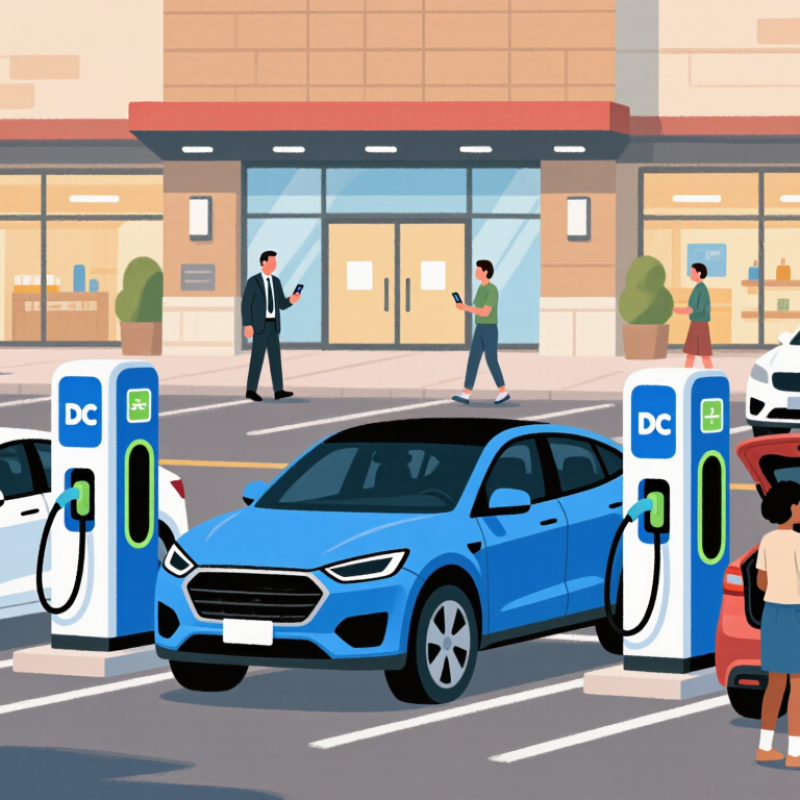
7 Best Ways Retail Parking DC Chargers Attract Customers

How DC Charging Integrates with Retail Parking

DC chargers work best when they fit naturally into retail parking, not when they feel like a separate destination. The U.S. Department of Energy’s Alternative Fuels Data Center says DC fast charging can take an EV to about 80% in roughly 20 minutes to an hour, depending on the vehicle and charger. That window can match a grocery run, café visit, or quick errand. Clear signs, easy-to-reach stalls, and safe pedestrian routes help drivers use that time comfortably. Small details matter.

Retailers can place chargers near store entrances without blocking accessible routes or high-turnover spaces. Charging bays also need visible directions and practical lighting, especially in evening hours. Still, charging does not guarantee extra sales. A customer may simply charge and leave. Stores should compare charger use with parking patterns and customer feedback before expanding; the first layout may need adjustment.

Tips: Start with a few well-marked stalls near everyday services. Keep cables off walkways, explain session pricing before charging begins, and review occupancy during busy periods. If vehicles regularly finish charging but remain parked, consider clear time limits or reminders. Avoid assuming every shopper wants a longer visit. Reliable operations matter more than an impressive charger count.

How Convenient Charger Locations Attract Passing Drivers

A driver passing a shopping center has only seconds to decide whether to stop. Chargers placed near a visible entrance or main parking aisle are easier to notice than units tucked behind loading areas. Clear signs from the road help, too. The choice feels simple.

Convenient placement can turn a quick charging stop into a store visit. A driver may park, connect the vehicle, then pick up groceries or a coffee while the battery charges. That works best when walking routes are direct and the charger is easy to find after parking. A bright canopy, readable stall numbers, and room to open car doors make the experience less stressful. Small details matter.

Visibility alone is not enough. Chargers should not block accessible spaces, delivery paths, or busy pedestrian crossings. A location that looks ideal on a site plan may feel awkward when cars are moving through it. Retailers can observe traffic at different times and ask visitors where they struggled to park or find the equipment. Not every passing driver will stop, and nearby stores cannot guarantee extra sales. Still, an easy-to-reach charging spot gives people one less reason to keep driving.

How Fast Charging Fits into Short Shopping Visits

A short shopping visit can be a useful charging window, not a promise of a full battery. The U.S. Department of Energy’s Alternative Fuels Data Center says DC fast charging can often bring a compatible vehicle to about 80% in 20 minutes to an hour. Actual times vary with the vehicle, battery temperature, charger output, and starting charge. For a shopper picking up groceries or collecting a prescription, even a brief top-up may add useful range. That matters. Clear signs, easy-to-find bays, and chargers near everyday stores reduce the friction of stopping.

The International Energy Agency’s Global EV Outlook 2024 reported that public charging points grew by more than 40% worldwide in 2023, while fast chargers grew by 55%. That expansion signals rising availability, but retailers still need to match charger capacity to real parking patterns. A quick visit may end before a vehicle reaches its target charge. Be honest about that. Display estimated charging times, keep charging spaces accessible, and avoid presenting every stop as a complete recharge. A charger beside a busy entrance can also create congestion, so placement deserves testing. Track session lengths and customer feedback, then adjust the layout; the first plan may not be the right one.

How Much Energy Can DC Fast Charging Add During a Shopping Visit?

Illustrative energy delivered during 15-, 30-, and 45-minute visits at 50 kW and 150 kW. Estimates assume a constant charging rate and 90% energy delivery efficiency; actual results vary with vehicle capability, battery state, and charging speed.

How Charging Amenities Encourage Longer Store Visits

DC fast chargers can turn a routine stop into useful time inside a store. A driver may arrive with a low battery, plug in, and shop while the vehicle charges. Clear signs from the parking area to the entrance reduce uncertainty, especially for first-time visitors. A charger near a well-lit walkway can make the stop feel more convenient. Small details matter. Staff should know how to guide drivers when a unit is occupied or unavailable. Accurate status information prevents frustration better than broad promises.

A longer charging stop may give shoppers time to browse, pick up a meal, or use the restrooms without rushing. Retailers can support the visit with seating, clean facilities, visible pricing, and an easy way to report faults. Yet extra dwell time does not automatically mean extra sales. Some customers will stay in their cars, and others may shop briefly. It is easy to assume every extra minute leads to a purchase; that assumption deserves testing. Compare charger use with store visits, customer feedback, and maintenance records before changing staffing or promotions. A blocked bay or unclear fee can quickly undo the convenience.

7 Best Ways Retail Parking DC Chargers Attract Customers — How Charging Amenities Encourage Longer Store Visits

# Charging amenity Practical setup How it can encourage a store visit Useful performance measure
1 Convenient DC fast charging Install clearly signed DC fast-charging bays near a store entrance, with power levels suited to the site’s electrical capacity and expected demand. Drivers can combine a charging stop with shopping instead of making a separate trip. Charging sessions per day; share of charging customers who enter the store.
2 Charging speed matched to the visit Choose charger output based on the typical visit duration. Actual charging speed varies with the vehicle, battery state, temperature, and charger limits. A useful charging window can make a grocery, dining, or household-shopping stop feel productive rather than like waiting time. Median session duration; customer-reported wait or convenience rating.
3 Visible wayfinding and bay information Use directional signs at parking entrances and show bay status, connector type, and access instructions where drivers can see them. Finding an available charger is easier, reducing uncertainty before a driver decides to stop. Bay occupancy; failed arrival or access reports; customer feedback on findability.
4 Reliable, accessible equipment Plan for routine maintenance, clear fault reporting, good lighting, safe cable reach, and parking spaces that are accessible and easy to navigate. A dependable, comfortable stop gives customers more confidence in choosing the location again. Charger uptime; time to resolve faults; accessibility-related service reports.
5 Useful in-store options during charging Make relevant services easy to find, such as restrooms, food, seating, groceries, or everyday essentials. Customers have practical reasons to spend their charging time inside rather than waiting in the vehicle. Store-entry rate among charging customers; category visits during charging sessions.
6 Simple pricing and payment instructions Display charging prices, payment methods, session rules, and support contact details before customers start a session. Clear terms reduce confusion and help customers plan how long to shop. Payment-related support requests; session-start completion rate.
7 Thoughtful bay turnover and customer communication Set clear parking rules, explain any idle fees or time limits, and provide a way to notify drivers when charging is complete. Customers can shop without repeatedly checking the vehicle, while clear rules help keep bays available for others. Post-charge bay occupancy time; repeat charging visits; customer complaints.
Planning note: These are practical design considerations and suggested metrics, not guaranteed sales or dwell-time outcomes. Results depend on site location, charger availability, vehicle behavior, store mix, and customer needs.

How Reliable Charging Builds Customer Loyalty and Repeat Visits

Retail parking lots can turn a routine stop into a useful charging break. When drivers find a working DC charger, clear instructions, and an open stall, they can shop with less uncertainty. That matters on rainy afternoons. Small details count. A visible status screen and well-marked bays make the experience easier, especially for drivers using a public charger for the first time.

Reliability gives customers a reason to return. If charging starts promptly, shoppers can grab groceries, browse nearby stores, or sit down for coffee without repeatedly checking the charger. A failed session can undo that goodwill quickly. Retailers should monitor charger availability, respond to faults, and keep contact information easy to find. A clean charging area also signals that the site is cared for.

Charging alone does not guarantee loyalty. Store selection, pricing, and parking access still shape where people choose to go. Operators can review service records and customer comments to spot recurring problems, such as confusing payment steps or blocked bays. Perfect uptime may be unrealistic; pretending otherwise helps no one. Honest status updates and timely repairs can still make customers feel their time is respected.

FAQS

How long might a DC fast-charging stop take?

Charging to about 80% can take roughly 20 minutes to an hour. The vehicle and charger affect the time. Small details matter.

Where should a retail parking lot place charging stalls?

Place them near everyday services and store entrances when practical. Keep accessible routes, busy parking spaces, and pedestrian paths clear.

What helps drivers find and use the chargers?

Use visible signs from the parking area to the entrance. Good lighting helps after dark. Keep cables off walkways.

How can stores make charging visits more comfortable?

Clean restrooms, seating, clear pricing, and a simple way to report faults can help. Staff should know what to do when a unit is unavailable.

Does charging automatically lead to more sales?

No. Some customers may shop, while others stay in their cars or leave. Not always.

How can a store check whether charging supports customer visits?

Compare charger use with store visits, parking patterns, customer feedback, and maintenance records. One busy afternoon may not tell the whole story.

What should stores do when vehicles remain parked after charging?

Consider clear time limits or reminders. Review busy periods first, so the rules do not create unnecessary frustration.

Should retailers install many chargers right away?

Starting with a few well-marked stalls can reveal what drivers need. The first layout may be wrong; review it and adjust.

Conclusion

Retail parking DC chargers can turn an ordinary stop into a more useful and appealing shopping experience. When chargers are easy to find and placed near store entrances, they can attract passing drivers who need a convenient place to recharge. Fast charging also suits short visits, allowing customers to make a purchase or run an errand while their vehicle charges. These practical advantages explain how retail parking dc chargers attract customers by connecting everyday shopping with a timely travel need.

Charging amenities may encourage visitors to stay longer, explore more of the store, and enjoy a less rushed visit. Just as importantly, dependable equipment and a smooth charging experience help build trust. When customers know they can count on a location during future trips, they are more likely to return. By combining convenient access, useful amenities, and reliable service, retailers can make their parking areas a welcoming part of the overall customer experience.

Mason

Mason

Mason is a seasoned marketing professional with a deep expertise in the company's offerings and a passion for driving brand awareness. With a strong background in digital marketing strategies, he has an innate ability to connect with diverse audiences and effectively communicate product benefits.......