The rise of electric vehicles (EVs) has brought about a significant increase in demand for Commercial DC Chargers. According to a recent study by the International Energy Agency, global electric vehicle sales reached 10 million in 2022, representing a 55% increase from the previous year. This surge in EV adoption underscores the importance of robust charging infrastructure.
However, the current charging network faces challenges. Many fast chargers are limited in availability and often experience heavy usage. A report from the U.S. Department of Energy highlights that, while there are over 100,000 public charging stations, only a fraction are DC fast chargers. This discrepancy creates bottlenecks for EV owners in urgent need of charging solutions.
Commercial DC Chargers play a crucial role in addressing this issue. They provide rapid charging, often capable of replenishing an EV’s battery to 80% in around 30 minutes. Yet, not all chargers are created equal. Some models lack user-friendly interfaces or adequate power output. There is a need for ongoing evaluation and improvement in this sector. As the market evolves, identifying the top-performing chargers becomes essential for businesses and EV owners alike.
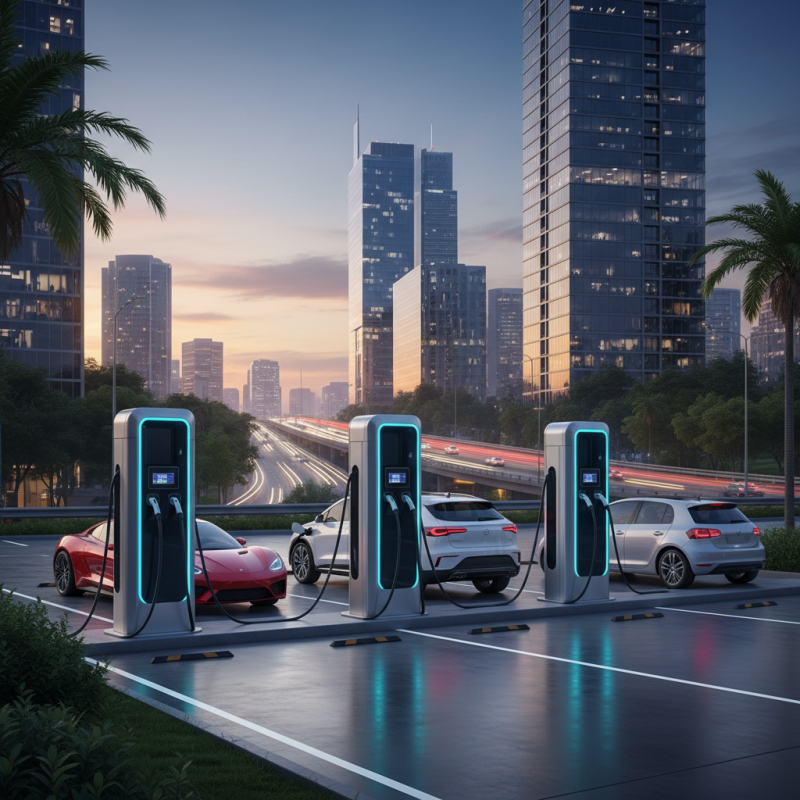
The market for commercial DC chargers is expanding rapidly. These chargers are crucial for electric vehicle users who need quick power-ups. They offer high charging speeds, significantly reducing downtime for drivers. Many businesses are considering these chargers to serve customers better. Locations like shopping centers, parks, and airports are ideal for installation.
DC chargers are designed to handle high power levels. This allows them to charge vehicles much faster than standard AC chargers. For example, a DC charger might provide an 80% charge in just 30 minutes. However, not all EVs are compatible with every DC charger. This can lead to frustrations for drivers looking for a quick charge. Clear signage and information about charger types are essential for improving user experience.
Another challenge is the maintenance of these chargers. Regular check-ups are necessary to ensure reliability. If a charger malfunctions, it can inconvenience many users. Businesses must find a balance between convenience and operational efficiency. Investing in a robust maintenance plan is often overlooked but critical. The right approach can make a significant difference in service quality.
: Commercial DC chargers are essential for electric vehicles, providing quick power-ups to reduce downtime for drivers.
A DC charger can typically deliver an 80% charge in about 30 minutes, depending on the vehicle.
No, not all EVs work with every DC charger, which can frustrate users looking for fast charging options.
Regular check-ups are needed to ensure chargers are reliable and operational for users.
Fast chargers often have advanced safety measures and efficient energy management systems for better performance.
Many areas lack fast charging infrastructure, with about 60% of stations still being slow chargers, causing gaps in availability.
Variations in charger reliability can lead to trust issues, as some may fail more often than expected.
Fast charging reduces time spent charging and encourages more drivers to switch to electric vehicles.
Installation costs and regional accessibility are key factors that impact the deployment of DC chargers.
As more EVs hit the road, the demand for diverse and reliable charging options is increasing, highlighting a need for infrastructure growth.
Commercial DC Chargers are pivotal in the evolution of electric vehicle (EV) infrastructure, offering rapid charging solutions that cater to the growing demand for efficient EV usage. This article explores the essential features and benefits of fast charging technology, emphasizing their role in reducing downtime and enhancing user experience. The selection criteria for the top commercial DC chargers include charging speed, durability, user interface, and cost-effectiveness, ensuring that businesses can find the most suitable options for their needs.
Additionally, the article provides a comprehensive comparison of leading brands in the DC fast charger market, highlighting their strengths and weaknesses. As EV usage continues to rise, the future trends in charging solutions point towards advancements in connectivity, integration with renewable energy sources, and improved customer service features. Overall, commercial DC chargers are set to play a crucial role in powering the future of transportation, making them an essential investment for businesses and charging networks alike.

 LA Charger