Core electrical engineering components designed to withstand rigorous outdoor environments and deliver high-throughput charging for fuel-station retail networks.



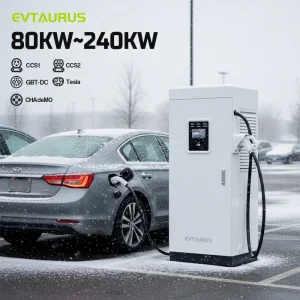
The global retail fuel sector is undergoing its most profound structural disruption since the inception of the internal combustion engine. As regulatory pressures accelerate, and consumer demand surges toward electric vehicles, traditional gas stations must pivot to survive. The conventional site model, characterized by rapid liquid refueling, low retail margins, and high carbon footprints, is transitioning toward the Multi-Energy Hub model.
This conversion requires sophisticated integration of grid infrastructure, megawatt-level energy storage systems (BESS), dynamic power distribution matrices, and on-site renewable generation. Modern EV charging configurations demand far more power than traditional fuel pumps. A standard service station converting four pump bays into ultra-fast charging bays may require upwards of 1.2 MW to 2.4 MW of continuous electrical capacity. Overcoming this grid-connection bottleneck requires robust technological solutions, high-durability liquid-cooled charging systems, and modular deployment strategies.
Integrating battery storage systems (BESS) directly buffer the local grid during high-demand peak charging hours, preventing localized utility dropouts.
Seamless communication protocols allowing retail networks to sync with dynamic spot-pricing algorithms, payment platforms, and fleet operations.
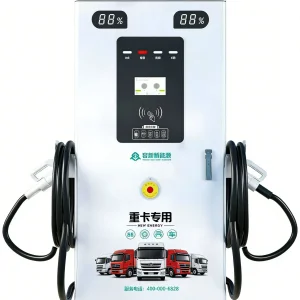
Deploying smart charging terminals fitted with large digital media screens for advertisement revenue generation and retail ecosystem integration.
Understanding the engineering trajectory of fuel station electrification is critical for long-term capital allocation. The transition is not simply about mounting chargers onto concrete plinths; it is a complex systems engineering task involving safety distances, hazardous area zones (ATEX/IECEx ratings), thermal management, and future scalability.
Between 2025 and 2030, standard fast charging is expected to transition toward the Megawatt Charging System (MCS) standard, specifically for heavy-duty fleets and fast-refueling passenger vehicles. Current liquid-cooled systems can supply up to 350 kW to 400 kW per gun, allowing 10-to-80% state of charge (SoC) transitions in under 15 minutes. Future sites must layout underground conduits and switchgear rooms to easily scale to 500 kW+ rates without tearing up structural asphalt.
Due to the presence of residual explosive gases around underground tanks, venting systems, and remaining fuel nozzles, EV charging dispensers must be carefully spaced. The electrical design must incorporate high galvanic isolation, earth-leakage monitoring, and automated emergency shut-offs integrated directly with the station's central emergency shut-down (ESD) system.
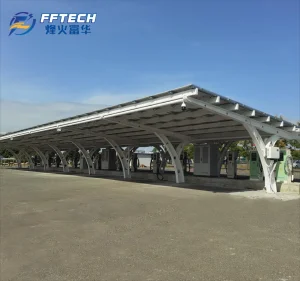
Modern layouts combine photovoltaic solar arrays (canopies covering the parking bays) with energy storage. This offsets localized peak grid loads, reduces commercial demand charges, and enables the facility to maintain core charging operations even during power outages.
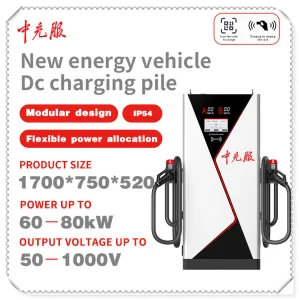
A critical technology in modern gas station conversions is dynamic power allocation. Rather than allocating a fixed 120kW per dispenser, charging matrices dynamically shift power modules in 20kW or 30kW increments. For instance, if one vehicle is topping off at a low rate, the remaining capacity is seamlessly rerouted to a newly arrived vehicle demanding peak throughput.
Pioneering the Infrastructure Behind the Global EV Transition
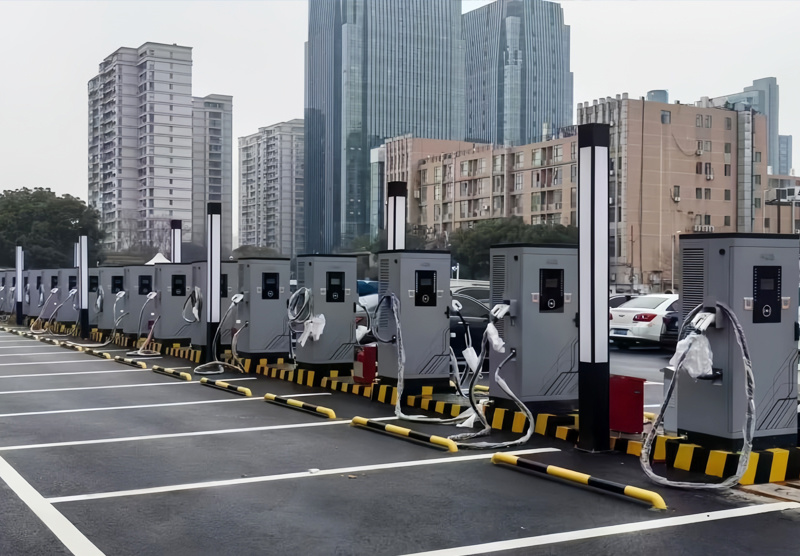
Guangzhou LA Charge Co., Ltd. is a leading provider of comprehensive electric vehicle (EV) DC charging solutions, headquartered in Guangzhou. Founded with a vision to accelerate the adoption of electric mobility, the company specializes in Indoor and Outdoor DC Charging Stations, Fast Charging Infrastructure, Smart DC Charging Management, and a wide range of residential, commercial, and fleet charging solutions.
The company operates a state-of-the-art 25,000-square-meter manufacturing facility in the Guangzhou Development Zone, equipped with advanced assembly lines, testing labs, and R&D centers. LA Charge employs over 300 skilled professionals, including engineers, software developers, and field technicians, dedicated to designing, manufacturing, and maintaining reliable charging systems.
Its product portfolio also includes Highway DC Charging Hubs, Retail and Hotel Destination Chargers, Office Building and Multi-Unit Residential Charging systems, Networked DC Charging Platforms, Solar-Powered Chargers, Interactive Display Chargers, Digital Screen Stations, Mobile/Portable Charging Units, and Urban Public Charging Networks.
With a focus on innovation, quality, and customer service, Guangzhou LA Charge Co., Ltd. collaborates with property developers, fleet operators, and government agencies to deliver intelligent, sustainable, and efficient EV charging solutions across China and international markets.
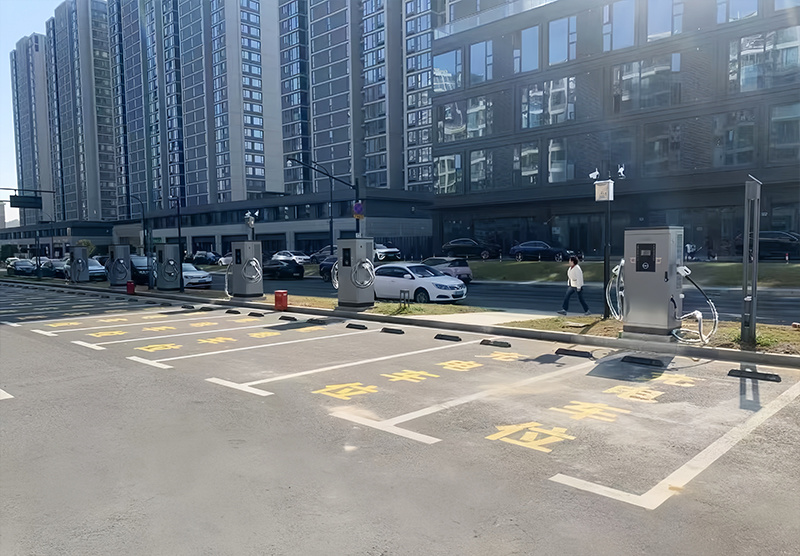
As governments globally mandate the transition to cleaner energy, supply chain bottlenecks pose a severe risk to infrastructure projects. Leveraging Chinese Advanced Manufacturing 4.0 allows for rapid project scale-up. High-capacity DC fast charging piles produced in Guangzhou benefit from mature vertical integration, encompassing component sourcing, raw material logistics, and highly refined assembly techniques.
A resilient supply chain ensures that critical raw materials such as silicon carbide (SiC) semiconductors, magnetic cores, high-grade copper cables, and intelligent cooling modules are sourced with short lead times. By utilizing automated assembly systems, integrated robotic testing, and stress-testing protocols (which simulate continuous thermal shifts and load peaks), Chinese exporters maintain a competitive cost structure while complying with stringent international safety and reliability metrics.
Every fast charger undergoes strict endurance testing, insulation verification, and full-load burn-in testing prior to export.
Hot-swappable power modules make servicing straightforward. A single module failure will not take the entire station offline.
Direct export routes from Guangzhou Port facilitate rapid global maritime transit, meeting tight project deadlines.
For multinational gas station operators, highway concessionaires, and B2B fleet logistics hubs, choosing an infrastructure partner requires thorough technical vetting. A standard Request for Proposal (RFP) should require compliance across these core categories:
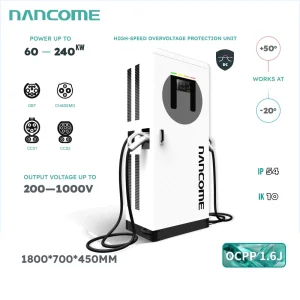
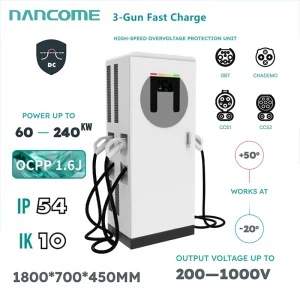
Equipment must offer high galvanic isolation, built-in overcurrent, overvoltage, short circuit, and ground fault protection. The enclosures must be rated at least IP54 (IK10 impact resistance) to ensure reliable operation in extreme weather, including sandstorms, high humidity, and sub-zero temperatures.
Select units with standard OCPP 1.6J/2.0.1 compliance to avoid vendor lock-in. Software must support remote firmware updates (OTA), dynamic diagnostic logs, and automated load curtailment commands from local grid operators.
Stations must support multiple charging connectors on a single dispenser: CCS1 (North America), CCS2 (Europe/Global), NACS (Tesla standard/North America), and GB/T (Asia/China). Dual-gun outputs should allow simultaneous charging with active load sharing.
Procurement departments should verify that the manufacturer offers localized technical support, spare part kits, and engineering training documentation to local installation crews.
Key technical and regulatory answers for infrastructure engineers and retail developers.
Generally, local safety codes (such as NFPA 30A in North America or ATEX directives in Europe) require EV charging dispensers to be located at least 20 feet (6 meters) away from hazardous vapor zones, fuel dispenser sumps, and underground tank vents. This distance can vary based on specific local engineering requirements and risk assessments.
Liquid-cooled charging cables are required for continuous currents exceeding 300A (typically around 150kW-200kW+ at 400V). Liquid cooling allows for thinner, lighter, and more flexible cables, while preventing the dispenser's internal power modules from overheating under sustained peak loads.
No, standard utility meters and switchgear at retail gas stations typically range from 50kW to 100kW, which is insufficient for ultra-fast EV charging. A comprehensive upgrade—including a new medium-voltage substation transformer (typically 10kV/20kV to 400V), industrial-grade switchgear, and dedicated distribution panels—is required.
OCPP 2.0.1 offers improved security certificates, native support for ISO 15118 (Plug & Charge), and enhanced device monitoring capabilities. This makes it easier to troubleshoot charging points remotely and simplifies the transaction process for end users.
Expand your depot capacity with off-grid hybrid networks, warehouse support systems, and high-efficiency destination charging piles.
 LA Charger