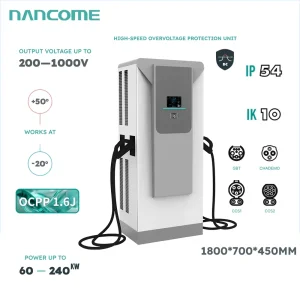
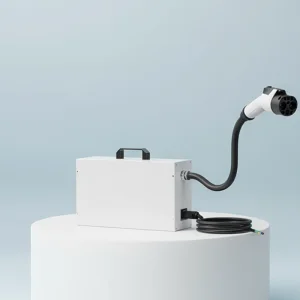
Explore our premium selection of integrated and split-type DC charging stations, configured with robust cooling topologies and global standard compliance protocols for logistics, mining, and highway corridors across Namibia.
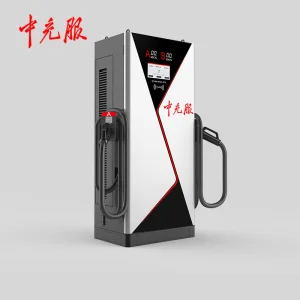


Namibia is uniquely positioned at the vanguard of Sub-Saharan Africa's green energy revolution. Spurred by national strategies such as the Harambee Prosperity Plan and global green hydrogen investments, the country is transitioning from an energy importer to a regional green power hub. However, establishing charging infrastructure in Namibia demands engineering that accounts for severe environmental challenges. Standard off-the-shelf European or Asian chargers often fail under the extreme UV radiation, severe sand dust storms of the Namib Desert, and voltage fluctuations characteristic of long-distance distribution grids.
As commercial logistics between Walvis Bay Corridor and landlocked neighboring countries (such as Zambia, Botswana, and Zimbabwe) scale up, commercial fleets are eyeing electric heavy-duty vehicles and light commercial vehicles to curb operating expenses. High-durability, IP55- and IP54-rated Outdoor DC Fast Chargers are crucial to minimizing downtime in remote locations. Our charging equipment utilizes advanced dynamic power allocation modules and enhanced liquid/forced-air cooling technology to operate efficiently under ambient conditions exceeding 45°C without thermal derating.
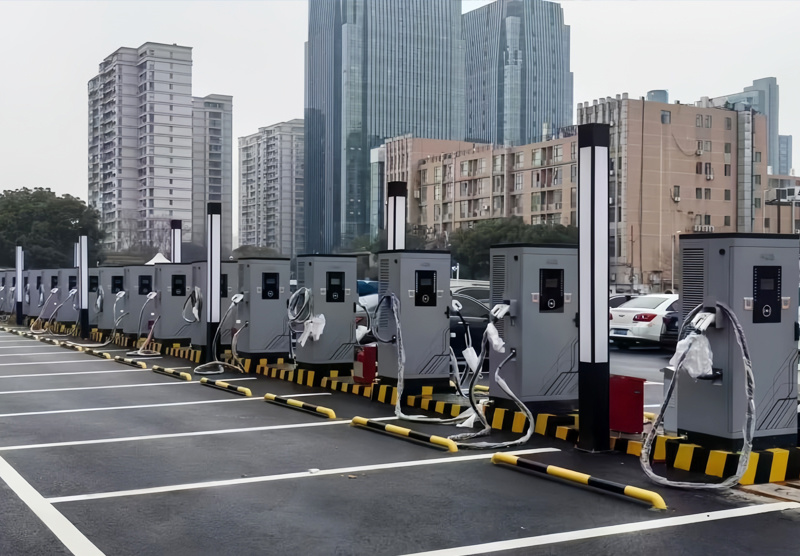
Globally, megawatt-level charging and high-power split-architectures (300kW to 480kW) are capturing the highway transit market. For Namibia, localized integration is key. Off-grid solar-coupled battery storage stations are gaining ground because Namibia possesses some of the highest solar irradiance indexes globally. By integrating photovoltaic arrays, BESS (Battery Energy Storage Systems), and high-power DC fast charging piles, local operators can deliver high-voltage DC charging without relying entirely on NamPower's central grid.
Based in China's advanced manufacturing epicenter, Guangzhou LA Charge Co., Ltd. is a leading provider of comprehensive electric vehicle (EV) DC charging solutions. We leverage a robust industrial supply chain to manufacture systems that deliver superior performance at optimized unit costs.
Our state-of-the-art facility in the Guangzhou Development Zone integrates advanced SMT (Surface Mount Technology) assembly lines, climate-controlled testing chambers, and full power-load simulation laboratories. By designing our own power controller PCBs and firmware, we ensure full OCPP 1.6J/2.0.1 compliance and seamless integration with third-party local payment gateways and fleet management systems in Windhoek, Walvis Bay, and beyond.
We optimize product assembly cycles through automated visual inspection (AOI) and digitalized supply chain planning, offering rapid turnarounds for customized procurement orders from Southern Africa.
Our entire production portfolio holds international CE, FCC, UL, and TUV certifications, ensuring hassle-free clearance and installation approvals under SABS and local Namibian grid codes.
As Namibia pursues sustainable development, key sectors are integrating fast-charging infrastructure. We provide tailored solutions across several core application areas:
Our high-power 300kW and 320kw heavy-duty truck chargers are optimized for massive industrial vehicles operating in harsh, dust-heavy diamond and uranium mining fields along the Namib coast.
Deploying 120kW/180kW multi-gun CCS2 DC chargers along the B1 and B2 national highways linking Windhoek to Swakopmund, enabling cross-country electric travel.
Ecotourism lodges in Sossusvlei and Etosha can deploy our 20kW to 50kW chargers powered by battery buffers and local solar arrays, safeguarding delicate localized ecosystems.
Enabling regional and commercial bus networks or logistics fleets to charge multiple vehicles simultaneously using dynamic load-balancing power cabinets.
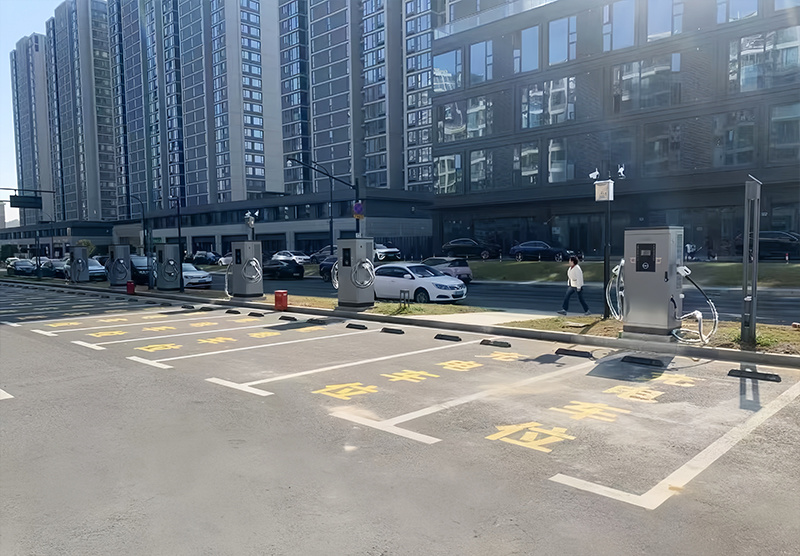
Choose from our complete portfolio of outdoor-certified DC fast charging hardware. Select models feature liquid-cooled charging cables and dynamic load-sharing control systems.
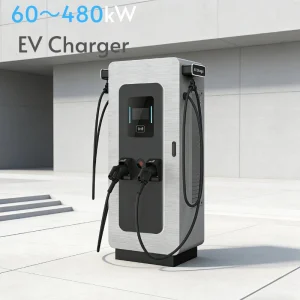
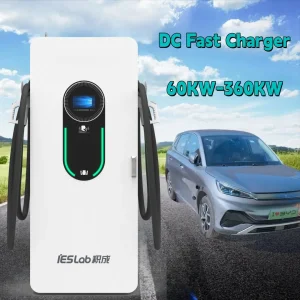
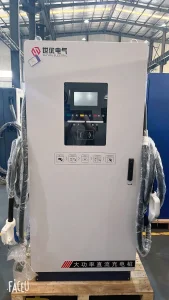
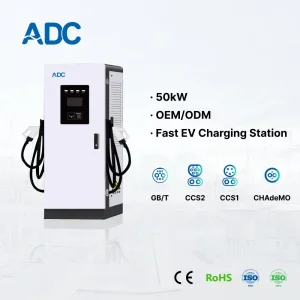
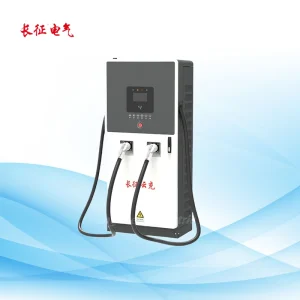
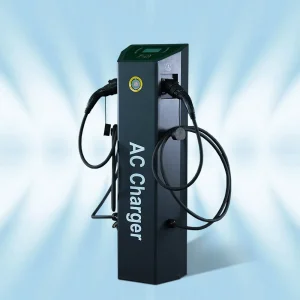
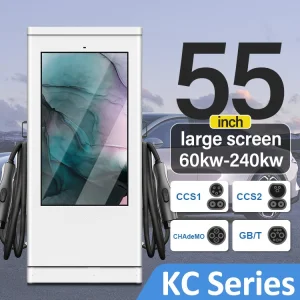
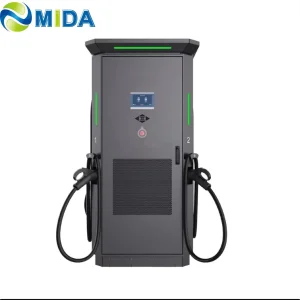
When procuring DC Charging Stations from China to Namibia, utility managers and private infrastructure investors must assess three primary engineering parameters:
Namibia's dry environment generates particulate matter that can compromise power electronics. Standard cooling intake paths draw in dust, coating power modules and triggering premature thermal failures. Our premium range of charging piles uses independent air ducts and sealed electronics compartments to isolate the power modules from external airflow. This design keeps dust, moisture, and insects away from critical components, ensuring reliable operation.
Extreme daytime temperatures can reduce a standard 120kW charger's output to under 80kW to prevent overheating. Guangzhou LA Charge systems use advanced internal air circulation, low-loss semiconductor topologies, and liquid-cooled options. These engineering updates allow our chargers to operate at full capacity at ambient temperatures of up to 45°C, ensuring consistent power output.
Integrating chargers into billing networks requires OCPP 1.6J or OCPP 2.0.1 compatibility. Namibia's remote networks can experience periodic offline phases. Our proprietary software features local caching of transaction authorization details, enabling chargers to function and process cards or RFID tokens even during cellular outages.
 LA Charger