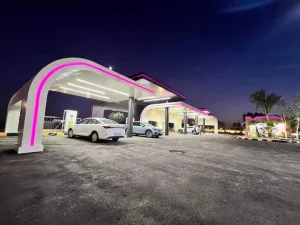
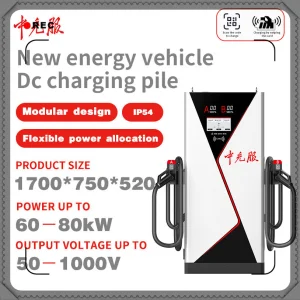
As aviation hubs worldwide commit to aggressive Net-Zero initiatives, carbon mitigation is no longer restricted to airplane engines. Airports are rapidly electrifying their vast operations, including passenger vehicles, shuttle services, and critically, airside Ground Support Equipment (GSE). Implementing high-reliability Airport DC Charging Hubs is the cornerstone of this transition.
Unlike standard highway infrastructure, airports operate 24/7. GSE fleets, baggage tugs, pushback tractors, and catering trucks require rapid, multi-voltage charging cycles with absolute operational uptime.
Aggregating megawatts of charging power across runways and terminal parking lots calls for intelligent dynamic load balancing, localized energy storage systems (BESS), and microgrid integration.
Hubs must support global charging architectures (CCS1, CCS2, GB/T, NACS) alongside specific aviation communication protocols and high-level cybersecurity to protect airport networks.
Guangzhou LA Charge Co., Ltd. is a leading provider of comprehensive electric vehicle (EV) DC charging solutions, headquartered in Guangzhou. Founded with a vision to accelerate the adoption of electric mobility, the company specializes in Indoor and Outdoor DC Charging Stations, Fast Charging Infrastructure, Smart DC Charging Management, and a wide range of residential, commercial, and fleet charging solutions.
The company operates a state-of-the-art 25,000-square-meter manufacturing facility in the Guangzhou Development Zone, equipped with advanced assembly lines, testing labs, and R&D centers. LA Charge employs over 300 skilled professionals, including engineers, software developers, and field technicians, dedicated to designing, manufacturing, and maintaining reliable charging systems.
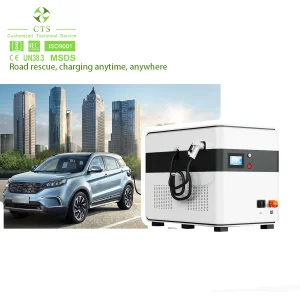
Its product portfolio also includes Highway DC Charging Hubs, Retail and Hotel Destination Chargers, Office Building and Multi-Unit Residential Charging systems, Networked DC Charging Platforms, Solar-Powered Chargers, Interactive Display Chargers, Digital Screen Stations, Mobile/Portable Charging Units, and Urban Public Charging Networks.
With a focus on innovation, quality, and customer service, Guangzhou LA Charge Co., Ltd. collaborates with property developers, fleet operators, and government agencies to deliver intelligent, sustainable, and efficient EV charging solutions across China and international markets.
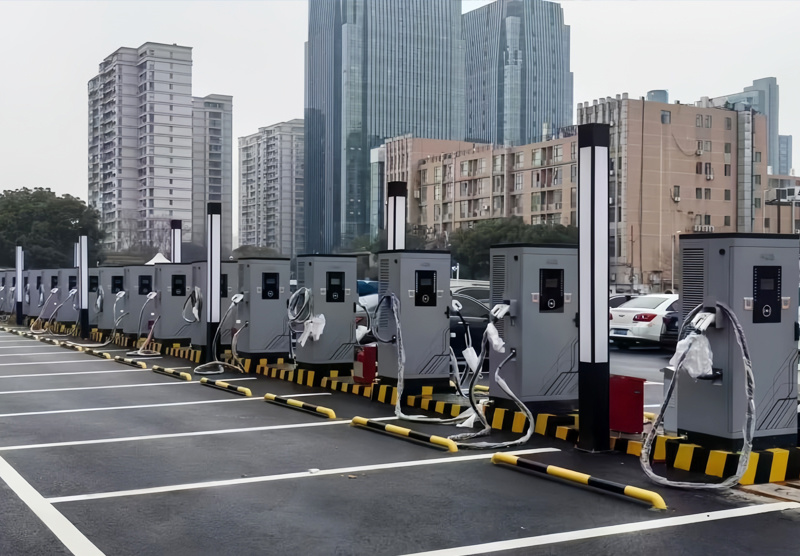
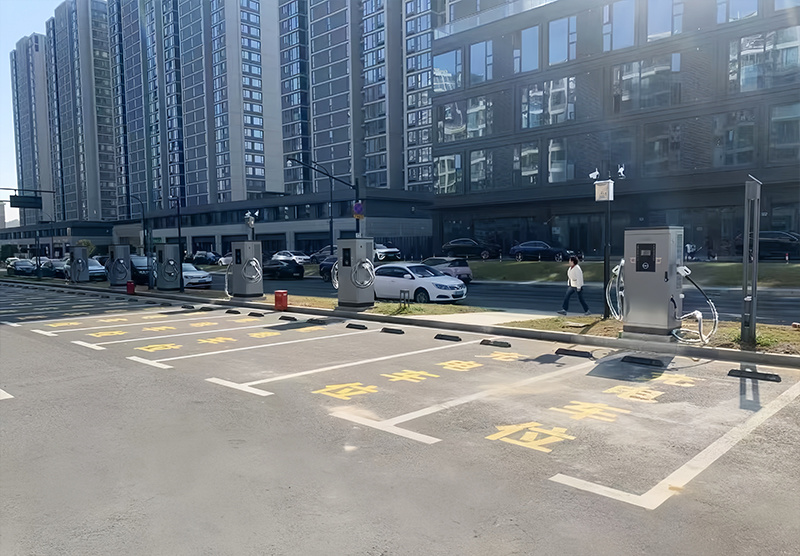
Electrifying airport aprons and logistic pathways introduces challenges distinct from highway electrification. The following trends represent the future of industrial-grade airport infrastructure:
For heavy duty belt loaders, pushbacks, and airport regional fire trucks, conventional 150kW fast charging is insufficient. MCS standards allowing >1MW rates are entering pilot phases to reduce turnaround times to under 15 minutes.
Airport ground vehicles sit idle during flight operations. Through Vehicle-to-Grid (V2G) interfaces, idle GSE fleets act as virtual power plants (VPPs) providing critical peak-shaving support to terminal facilities.
Tarmacs have high spatial limits. Decentralized split charging systems—housing the main power transformation cabinet away from active taxiways while running slim, remote charging satellite pedestals near bays—are highly favored.
Understanding where and how energy is deployed is critical to designing a cohesive charging hub strategy:
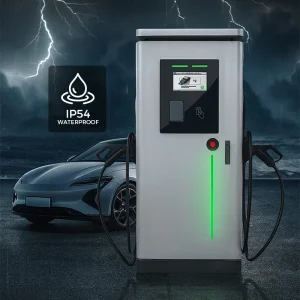
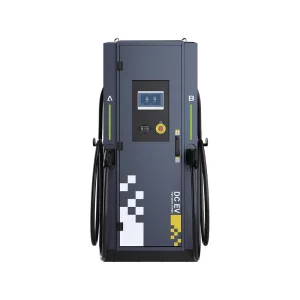
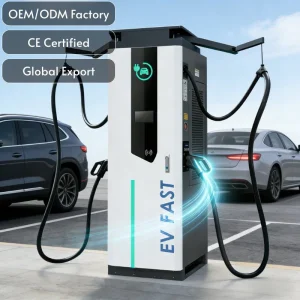
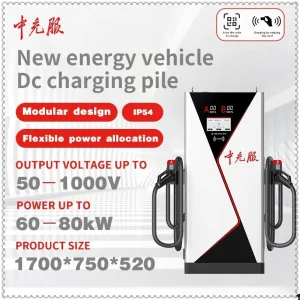
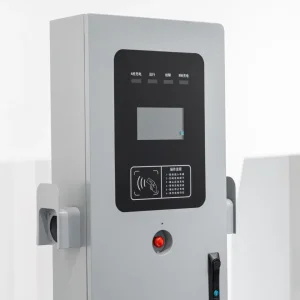
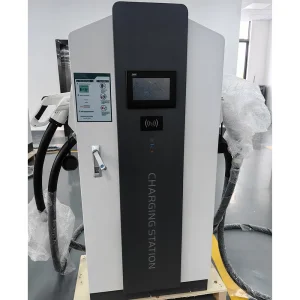
Heavy-duty apron operations run on strict timetables. Charging equipment must withstand high physical impact risks (IK10), jet fuel exposure, and wide operating temperatures (-30°C to +55°C). Dual-gun active power-sharing chargers (120kW-240kW) allow ground crews to charge two service vehicles simultaneously during gate turnarounds.
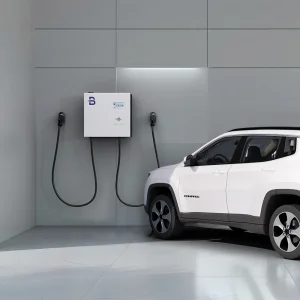
Long-term and short-term parking structures require smart AC wallboxes combined with moderate-to-high speed DC fast chargers (40kW to 120kW) equipped with integrated Point-of-Sale (POS) systems. This provides passengers and airport taxi fleets with plug-and-play charging integrated into airport parking fees.
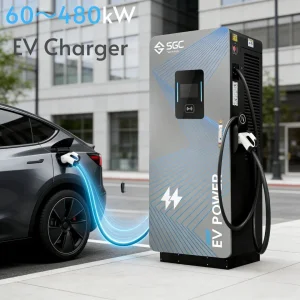
Cargo hubs run continuously. High-capacity, split-type charging stacks (up to 360kW) serve heavy logistics vehicles and electric terminal shunts. Featuring OCPP 1.6J/2.0.1 integrations, these units coordinate directly with automated warehouse fleet management software to schedule charging cycles around delivery times.
Choosing the right industrial partner ensures long-term operational viability and keeps capital expenditures (CAPEX) under control:
Guangzhou LA Charge utilizes its proximity to major industrial component ecosystems. This enables rapid sourcing of high-performance power modules, advanced liquid-cooled cables, and high-frequency transformers directly from tier-1 suppliers, offering shorter lead times.
China's top export manufacturers build to international safety codes. Equipment is rigorously tested for CE, TUV, CB, and FCC compliances. State-of-the-art labs carry out lightning surge resistance, high-humidity salt spray trials, and long-term full-load thermal evaluations.
Whether integrating specific payment gateways, building custom enclosures to match terminal branding, or programming specific load management algorithms for restricted grid networks, our R&D team can implement alterations within weeks rather than months.
Integrating EVSE into airport infrastructures requires addressing high peak load demands. We provide integrated systemic architectures to resolve utility bottlenecks:
Our centralized power cabinets utilize smart matrix switching. When a vehicle begins charging, the system dynamically routes power modules to that connector. If additional vehicles connect, the charger redistributes power blocks in 30kW increments, ensuring maximum charging speed without exceeding local substation capacity limits.
Airport hangars and terminal roofs present massive solar PV opportunities. Our DC fast charging systems connect directly with Battery Energy Storage Systems (BESS) and local solar arrays, allowing clean energy to buffer peak-hour operations. The systems can transition into local microgrids during utility disruptions, keeping airport ground support functional.
Addressing the core deployment, electrical, and mechanical concerns of procurement managers and consulting engineers:
 LA Charger